
Spain (Pt.1) Pole Lathe Trip – Culture & History
In early September, inbetween the Basketry Tear Up and the Bowl Gathering festivals, Amy Leake and I squeezed in a trip to Spain to research the pole lathe culture out there. We’re both incredibly grateful to the Worshipful Company of Turners for providing most of the funding for the trip, and also to all the staff at the Ethnographic Musuem in Grandas de Salime. Honestly, this trip will change so much about the methods I use (even more than they have already!). You’ll just need to be patient as these changes can’t happen overnight, but I can write about them in the meantime. There’ll be six blog posts to discuss what we discovered, and this is the first of them:
1. Culture and History of the pole lathe in Asturias.
2. Sourcing wood.
3. Asturian Treen.
4. Tools of the trade.
5. Lathe design.
6. Process (might need to be split into two blogs: side and end grain).
[Disclaimer: some of this information comes from translated books and articles, but a lot of it is by me translating the words of Arturo Iglesias, and my Spanish is not perfect by any means (and neither is google translate). So if there are any inaccuracies, I’m sorry, but hopefully the gist of it will be correct and of use to you, the readers!]
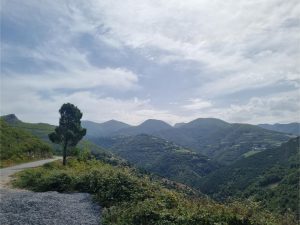
Firstly it is worth taking about the geography of Asturias. We flew into a tiny airport (OVD) and from there had a two-hour drive through increasingly mountainous wooded terrain to reach our first destination of note: Grandas de Salime. To reach our second destination, we continued in this landscape for another two hours South to the small village of Trabau or Tablado. In short, it is a pain in the balls to get to these places and even now it has the air of self-sufficiency about it with many houses having animals in their back gardens and vegetable patches. That the use of the pole lathe should have survived here longer than most is no surprise both for its self-sufficiency principles, but also its remoteness. Winters are cold here and that plays its part in how the pole lathe turners existed.
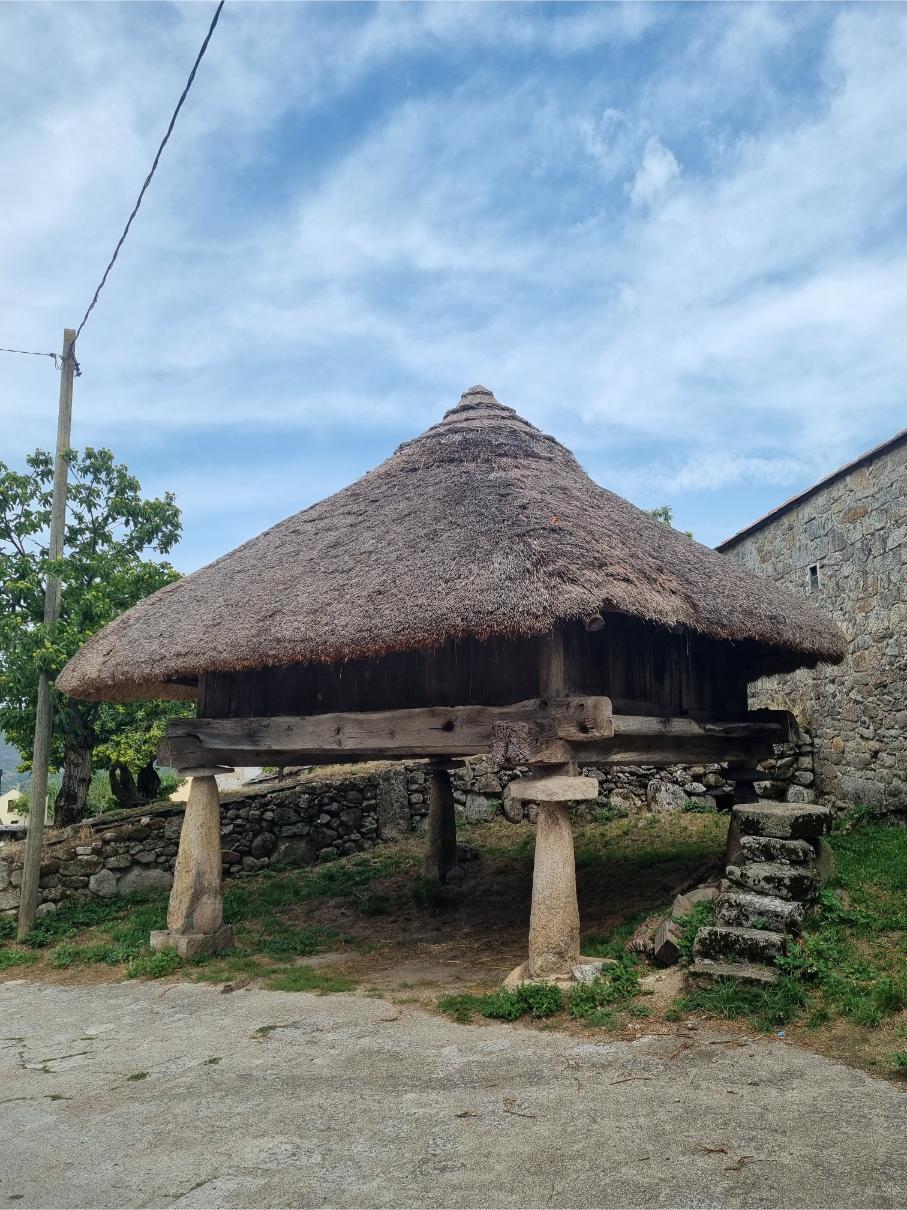
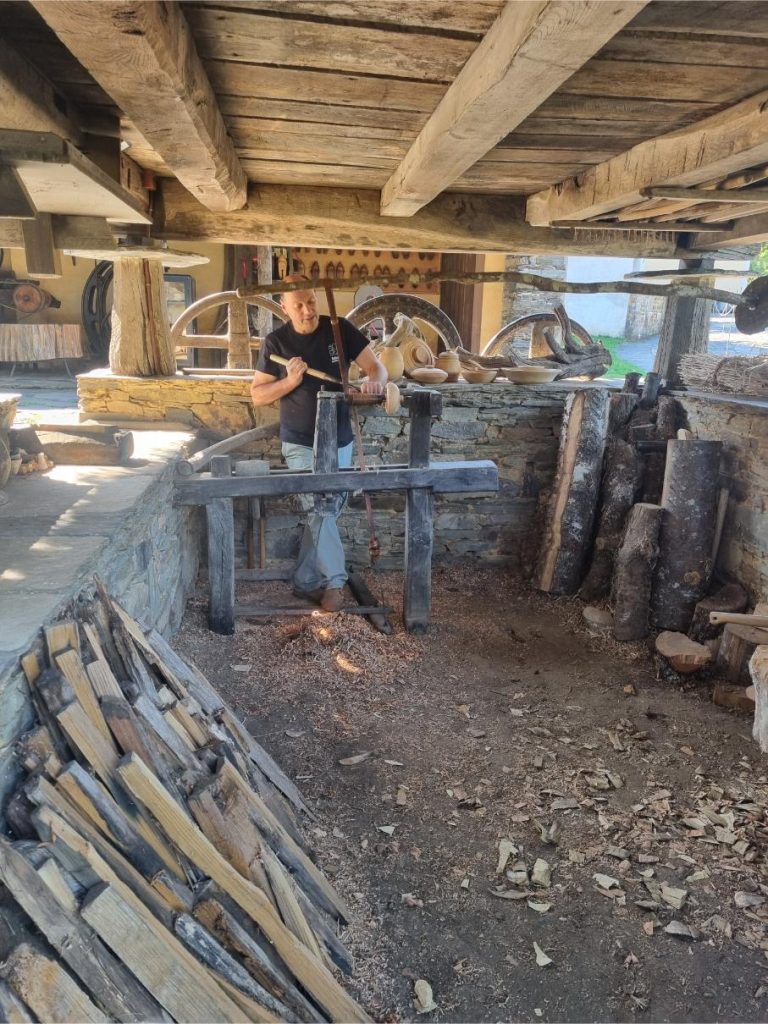
There were two types of turner according to Arturo: Those who walked and those who didn’t. The original turners appear to be the wandering turners (or ambuladores as Arturo called them, their official name being Cunquieros or Tixileiros), travelling around place to place plying their trade as they went (more on them later). Sometimes when they visited a village a local would watch them and then set up themselves but remain in situ. I imagine this was of benefit to the Cunquieros in a village a bit off the beaten track! This second way was how Jose Maria Muiña de Xestoselo in Grandas de Salime turned. I got the impression he only turned occassionally as he got older, one assumes because transport links improved and imports took away his market. Often the pole lathe turner would set up under a hórreo (grain barn, see photo at top) in the village.
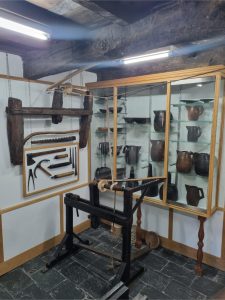
In 1955, a dam was built in the valley next door to Grandas de Salime to provide electricity to the region, flooding villages and their belongings. A local blacksmith called Jose Maria Escanlar (but known as Pepe (“El Ferreiro)), realised a change was happening from the old to the new, and set about collecting artifacts and knowledge saved from the flood. In time he secured a location and received funding to build a novel type of museum with live demonstrations of old crafts. In 1984 when the Museo Ethnograpico de Grandas de Salime opened Jose Maria Muiña demonstrated the pole lathe. Arturo said his 17 year-old self sat in the corner of the workshop and watched before going away to practise at his house, and 9 years later he became the new pole lathe demonstrator in the museum. Now, 33 years later, and at 59 years of age he is still going. It was truly wonderful to meet and spend time with someone so absolutely devoted to craft (he is also an extremely good blacksmith) and always keen to share that knowledge with the occasional visitors who veer off the Camino de Santiago in search of some shade and a bit of culture. [Nb. If you do decide to visit, bear in mind that Arturo only demonstrates the pole lathe in June-September each year.]
I found it particularly fascinating how ‘teaching’ of crafts seemed to occur. Mainly watching and the occasional question. This gives the time for the apprentice to hone their skills with no apparent money exchange. Crucially (in my eyes) it gives a chance for the’apprentice’ to try new things and not be held back by the ‘master’s’ way. Often either the master will say my way is the only way, or the apprentice will assume the master knows everything and this can hold back a craft developing with the times. (There is a really good section in William Coperthwaite’s ‘A Handmade Life’ about not idolising people, which is worth a read on this topic). There is less chance of this happening with how Arturo learnt. I really loved how Arturo said that the image of him behind a lathe was the culmination of years of skill evolution (probably paraphrased him here!). He also didn’t claim to be the pinnacle, in other words, there is always room for improvement. On reflection, I feel this is perhaps a reason that craftspeople have been reluctant to write stuff down about their processes, they’re aware that they’re always changing and that something written is at risk of being outdated.
My takeaways from this were that:
a) How skills were passed on, not paid teaching or apprenticeship, but observation and play.
b) The unbroken link of pole lathe knowledge stretching back millennia. Are there any other turners like this I wonder lurking in hidden corners of the World?
c) The foresight of Pepe and others to rescue what was being lost.
d) How the museum will change in the coming years when Arturo and the others retire. If there is a young Spanish person reading this who is passionate about craft then please go watch these remaining masters and perhaps you’ll be able to take their place! (Nb. he has tried to teach others, but no-one kept it up, primarily one imagines as there is little perceived need for his products)
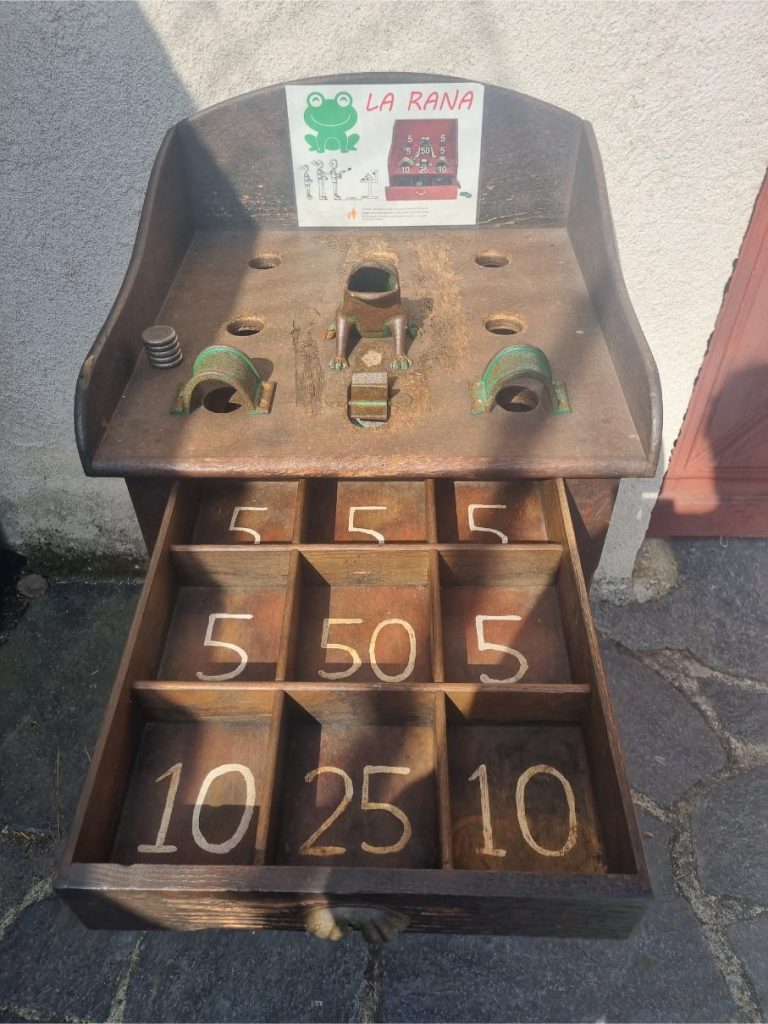
After three days pestering Arturo (you can only begin to imagine how much we learned!), we headed South to the homeland of the walking turners The Degaña valley, This valley was even more remote with steep wooded sides with little villages nestled in the bottom. Each village specialised in a craft, woodturning in Trabau/Tablado, basketmaking using sweet chestnut in Rebollar (apparently someone still makes there), and wooden clogs in Corralín. In Trabau we hoped to meet a turner called Victor whose uncle Victorino had set up a tourism business talking about the valley’s past. Victorino unfortunately died recently at the age of 59, another reason that we wanted to get out there as soon as possible. Victor unfortunately, after good initial communication, had gone quiet and when we reached his cafe and the small museum (with an old lathe inside) were closed, and no-one in the village seemed to know for how long. Hopefully he was just having a holiday after a busy tourist season.
From our tourist leaflets in the airbnb, and a few online sources including a video of Victorino talking, we did learn a lot though. These Ambuladores (literally translated as walkers), were known under two different names down here: the Cunqueiros or the Tixileiros. They were a band of craftsmen who walked across Spain through the regions of Castile, Extremadura, and Andalusia after the harvest was in each year (one assumes in part to escape the cold winters!), carrying the metal of their lathes as they went. When they arrived in a village in need of some treen they’d set up shop, build a lathe and start making! Their group consisted of wood sourcers and preparers, turners and also crucially sellers. I do not know if these jobs were unique to individuals or if they swapped around as they travelled so everyone got some of the fun! This ties into the design of their lathe and indeed the methods used, which I’ll go into in future blog posts. In the late Spring and summer they would return to the valley to help tend the land.
My takeaways were that:
a) It is possible to cycle tour as a pole lathe turner, just carry your metal and build a lathe when you arrive! This has been a dream of mine forever, but with a baby on the way, it may not be that I can ever do it. Maybe someone else will…
b) They did NOT turn all year round. Using a pole lathe is physical work, it inevitably creates muscle imbalance. Giving the body a break prevents repetitive strain injuries etc. Currently I turn on and off all year round.
c) They walked a lot. George Lailey also walked to his workshop each day. Gwyndaf Breeze also in South Wales. Once again, this is going to restore balance to the body, vital it seems if you are not going to end up a physical wreck after using the pole lathe for production volume.
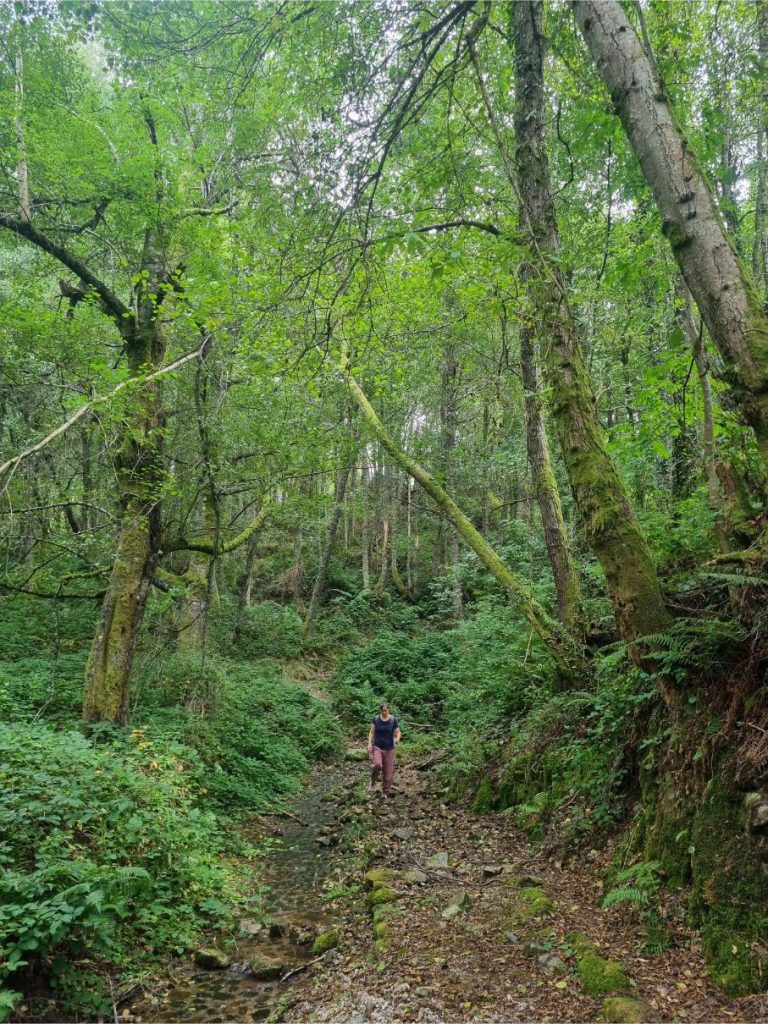
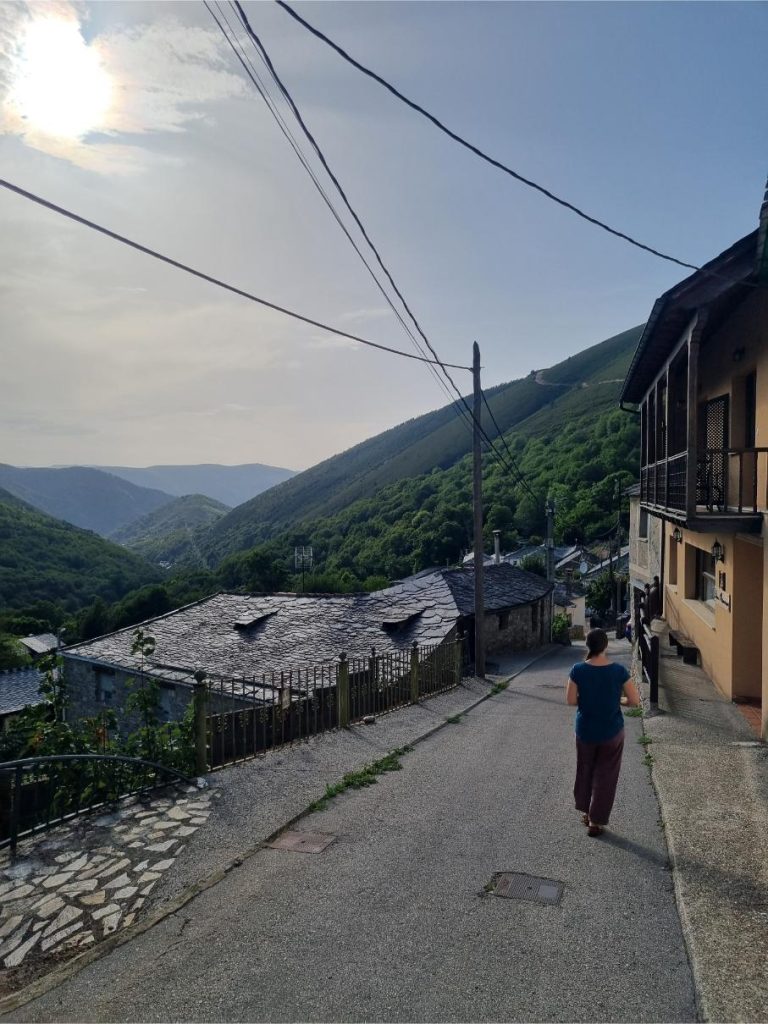
I would strongly encourage everyone to visit these places and see for yourself. Arturo admits he won’t be turning for ever! The pace of life, the friendly locals and beautiful scenary and walks deserve more attention than they got (when driving we’d be lucky to see 10 cars per day!). You probably need some level of Spanish though!
If you want to see some of the videos that are already online, here are some links:
a) Arturo turning a cuenca (bowl)
b) Arturo turning a large jarra (jug)
c) Victorino turning a bowl and talking about the Degaña region.
Thanks and see you soon for Part 2.
Thanks Geoff for writing this and sharing, absolutely fascinating
Thanks Steve! Hope you enjoy the whole mini series 🙂