
Spain (Pt.2) Pole Lathe Trip – Wood Sourcing
This week’s blog will be significantly shorter than last week, but is not less important. I feel that what Amy and I learnt whilst in Spain with Arturo, about how the raw material is used, will change the way I work forever. I’ll start by talking about what woods were used, then when the wood was cut, then how it was stored.
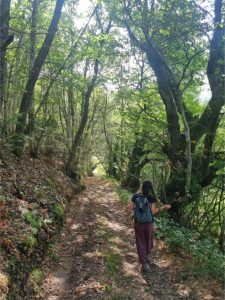
In Spain, the woods used for bowls and cups are similar to those we work over here in the UK. Commonly used woods were birch, walnut, cherry, sweet chestnut and alder. Some beech and sycamore was used, but not as much as over here. No horse chestnut or any of the other weird woods which I turn (the latest odd wood on my lathe was wisteria!). It seems that a selection was used rather than one in particular like in Wales where Sycamore was predominantly used. Having said that, on our walk in the Degaña region there were some big old birch (see pic in previous blog) and sweet chestnut (see below) down near the road which suggests that was these were the woods of choice for these woodturners.
The time of year when the wood was cut was really important. First and foremost, wood was cut on a waning moon, ideally in the third quarter (the week before a full moon). The reason for this is to minimise the sap and sugars in the wood reducing the risk of fungal and insect attack, and thus increasing the longevity of the item. The hórreos (grain stores) were hundreds of years old and we didn’t notice a woodworm hole the entire trip. This idealogy is not just limited to the woodturners, all across the region of Asturias, other woodworkers will explain that they use this method such as the basketmakers. Secondly, the wood tended to be only be cut in the winter when sap was at its lowest, so from September onwards, with the best wood said to be December or January cut. I think I can visulise how conveniently this would fit into a work pattern for the cunquieros: Given they could only cut for one week, they would probably then make for three, then cut again. In the summer they worked the fields with no turning going on. At first glance, it might be thought of as coincidence, but in my opinion it was an appreciation for the seasons and a connection to the land in the way that I and many others have lost.
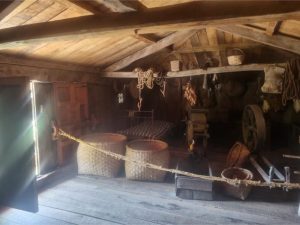
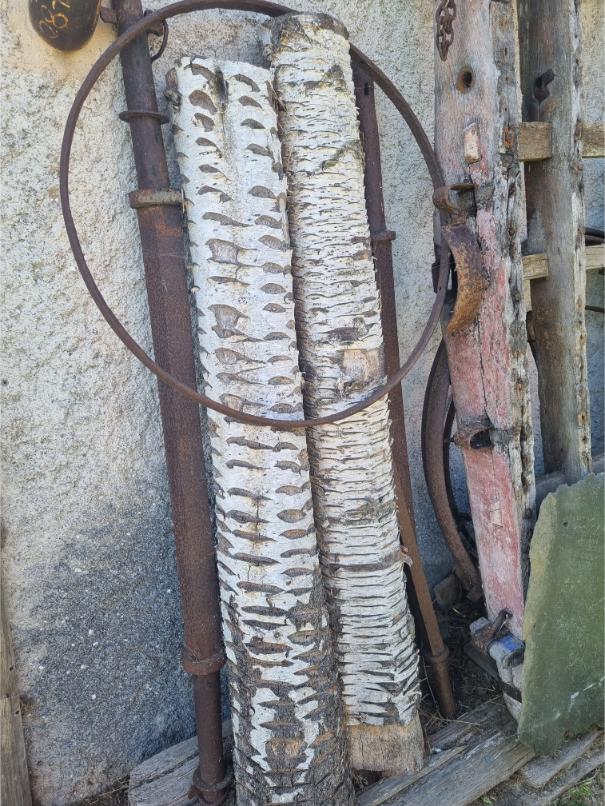
Wood was stored differently too in Northern Spain. The Spanish way was to store logs vertically and under cover to prevent mushrooms from inhabiting the log. Birch wood was actually treated even more severly to prevent fungal attack…a long drawknife cut was made along the length of the log, then small axe marks were made in the bark along its length. I had seen these on a video and had assumed it was to dry the log out, but no, it was to prevent the ideal conditions for fungal growth which exist in the interior of birch in particular due to its waterproof bark. According to Arturo, ideally he would cut the birch and then leave it for 2 months before turning it as he finds that then it is less fibrous. Often he ends up turning dry wood though as he cuts it himself from a limited supply and only turns it when there are people to demonstrate to, so by the time we visited in September, most of the wood he had left was dry. I have heard elsewhere that sycamore planks are always stored vertically and inside to prevent fungal discolouration too.
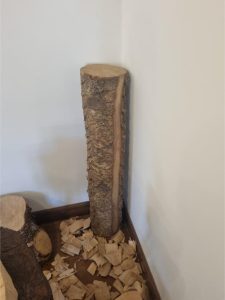
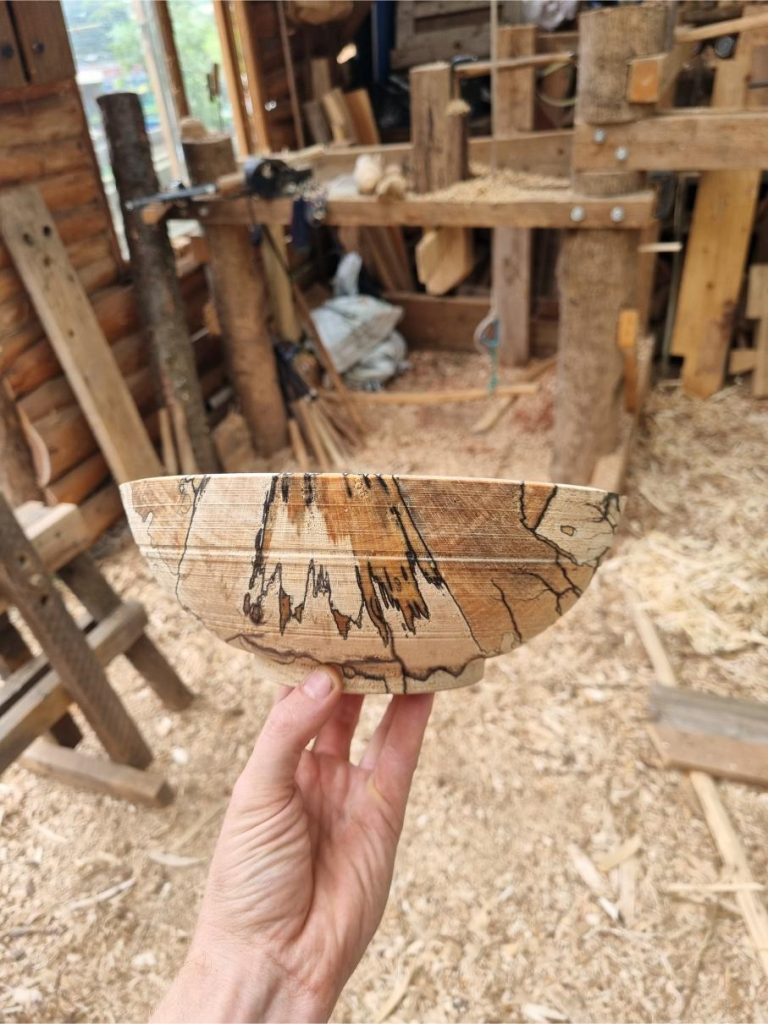
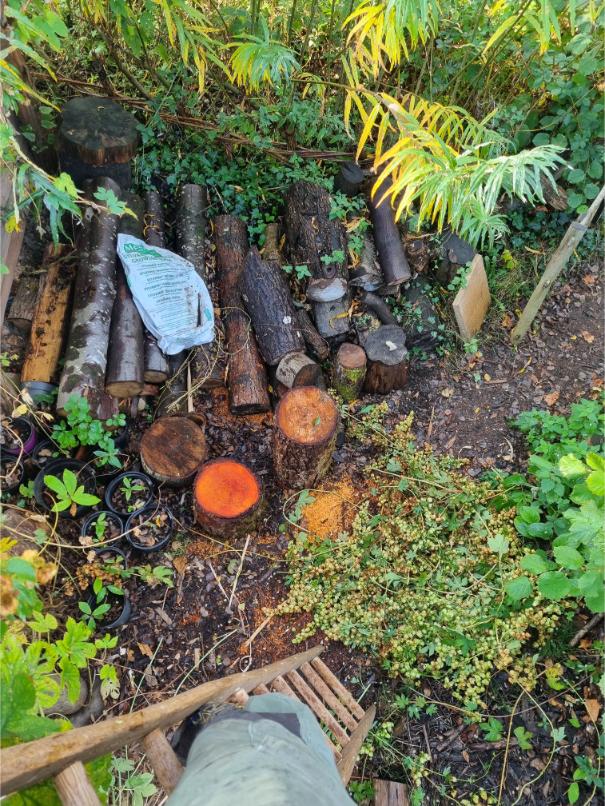
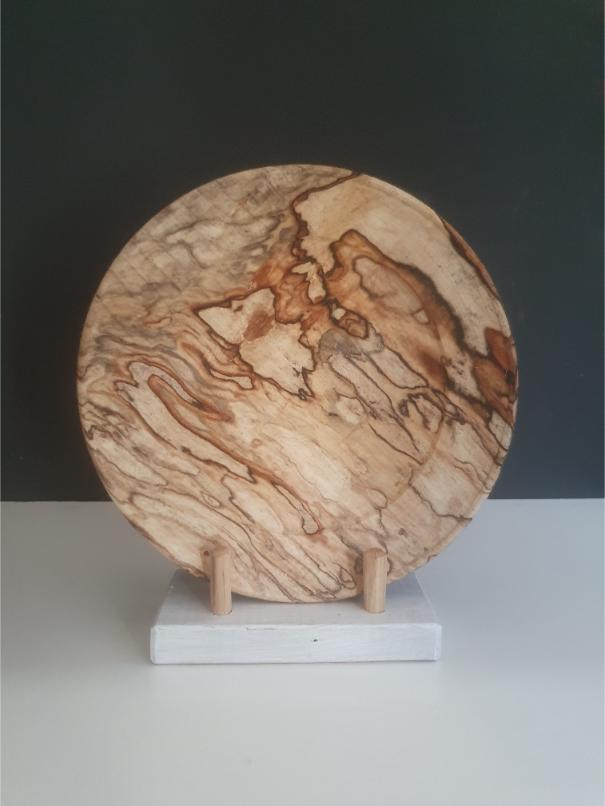
I currently store my logs outside in the shade so they don’t dry out too quick, but also the rain, and with soil contact which I believe mellows them faster (or as George Lailey used to say “to become ‘kind’ ”). However this causes fungus to inhabit the wood. I have tolerated this thus far because, it can produce patterns in the wood which customers find irresistible! The problem here is that, as Arturo states, the fungus often weakens the wood, something I remember Robin Wood blogging about. As research for this post, I briefly checked some photos of George’s setup in MERL’s big folder of records. There is a photo of him there holding a big saw behind an elm log, which is ‘coincidentally’ suspended in the air so it only touches the ground at one end. In other words it is stored outside, but with minimal soil contact. I’d have to look at some other photos (I think there were some in ‘The Reading Lathe’ book), but it does suggest he perhaps allowed the wood to mellow off the ground. The other disadvantage of working spalted wood is the spores flying around whilst you turn it and going in your lungs.
I spoke to Amy (who turns a lot of sycamore) and she has been storing her logs off the ground, but still in the elements. She notices that once those greeny flecks moving through the wood have become well established, the wood loses strength quickly. She also notes that where the tree has been attacked by fungus whilst still living it can create a distinct brown colouring in the heartwood which does not appear to have sacrificed any strength. So there does need to be nuance on the statement ‘spalted wood is weaker’. It depends on the fungus and how long it has been established. Amy also notes that if you do not have inside space to store logs then turning the logs regularly is going to mean that the fungus takes longer to build up in one place.
It seems to me that the turners worked directly with foresters to ensure they had supplies for that months turning. This is a very proactive approach. I find myself shifting in this direction as the years pass, but to begin with I was much more reactive. I found myself turning when wood appeared, rather than sourcing out what I needed to use. In part this was because I did not know what I needed and over time I’ve built that knowledge. I still recommend to new woodturners to try and turn as many species as possible to get a feel for how different woods behave. You may also notice how the same tree will turn differently over time as it mellows. I’ve even had trees that have been down for 9months and do not spalt, yet the same wood down for three months and lots of spalting…it’s almost as if the time it was cut was important or something 🙂 .
I can see myself finally making the shift to seasonal working, only working with wood cut on a waning moon, and only taking into the workshop that which I will work (it is so hard to say no to free wood though). This will support forestry which I am so passionate about, produce a longer lasting product, and result in less waste.
- Less waste as I’ll only bring into the workshop that which I work.
- Longer lasting as the wood will have fewer saps and sugars in to prevent fungal insect attack.
- Help support forestry*, because I will need specific timber cut at specific times to suit the items I wish to make.
Now all I need to do is figure out where in my already cramped workshop I can store logs upright to prevent fungal growth 🙂 !!! Thanks for reading all! I always appreciate comments on these posts, but if anyone has direct experience of the difference in fungal growth between waning and waxing moon-cut wood, then I’d love to hear about it!
*A footnote on this last point, as people often believe cutting down trees is a bad thing. I can see their point, but I think quite the opposite can be true and in the future I’ll do a short essay explaining why I think this.