
Spain (Pt.3) Pole Lathe Trip – Forms
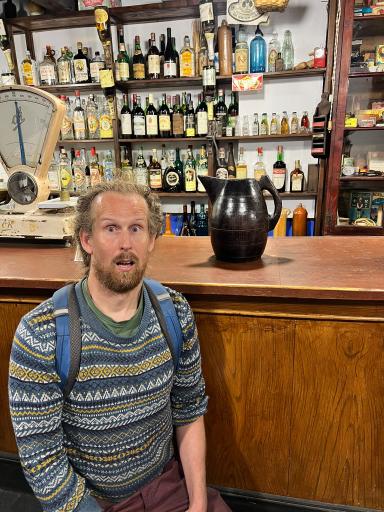
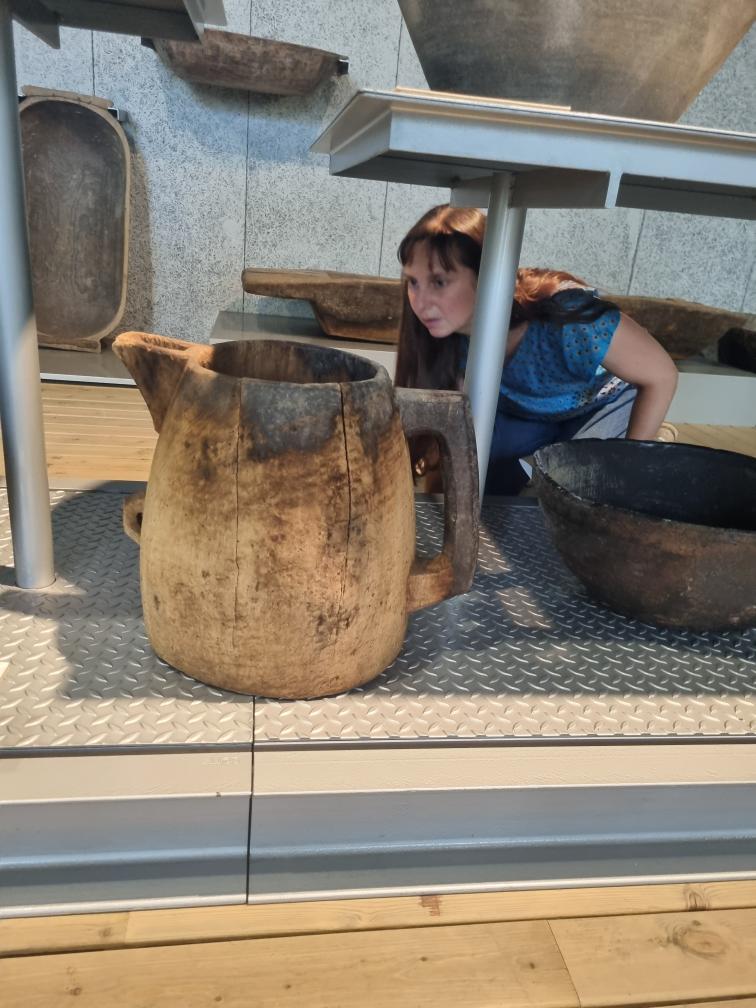
So we’ve covered a little about the culture and lives of pole lathe turners in Northern Asturias in the last two blog posts. The next thing to cover is what things they made and to what designs. I find design fascinating, and am always looking to make new objects in the optimum way in order to meet four things (which I class of equal importance). These are: Beauty, Functionality, Ease and Need. In slightly wordier language, the object has to be beautiful, work well for their intended purpose, be relatively easy to make, and to be needed. In an ideal world they all help each other. But to get your attention, here are some photos of very large treen with out heads for scale! 🙂
The Asturias region is steeped in traditional forms honed and enjoyed over millennia. One thing, which I only now appreciate, is that most turning I saw out there was of hollow form vessels and not spindle turning (save the mandrels upon which the leather drive strap rotated). Doubtless spindle turning existed, but I wonder how much this was seen as purely decorative when a stick would have sufficed. I would have to visit again to see how many ‘sticky’ objects were carved as opposed to turned! The cunquieros at least seemed to only focus on these hollow forms which Arturo still demonstrates today in the Museo Ethnographico de Grandas de Salime. The everyday items deemed to be better made from wood than other materials were:
- Eating and serving bowls: Cuencas or in specific cases Concas.
- Drinking cups: Vasos for everyday drinking cold drinks from.
- Goblets: Copas for drinking.
- Drinking bowls: Cachos for passing round wine.
- Salt jars: Saleros for storing salt and other foods in.
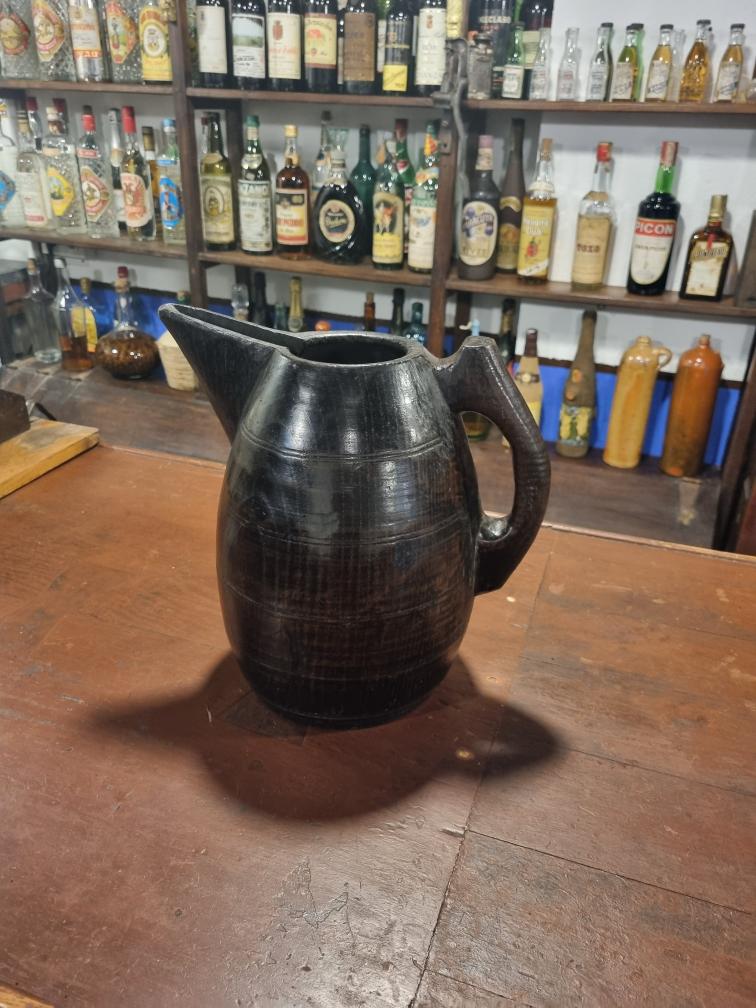
- Jugs: Jarras or Xarras for pouring wine, cider and water etc.
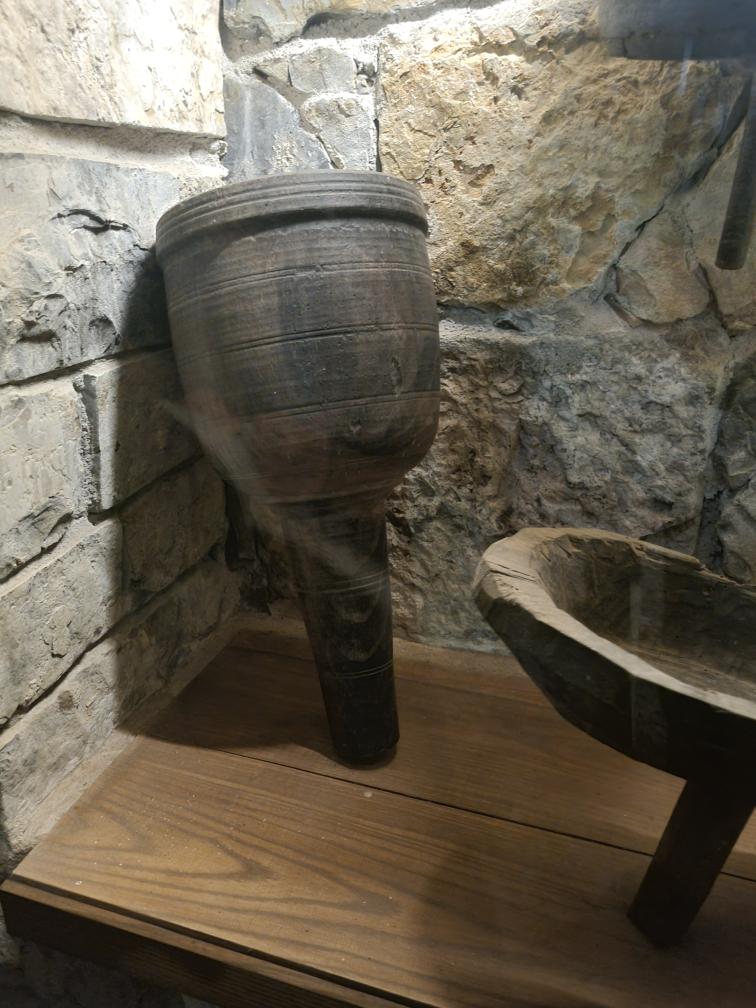
- Funnels: Embudos used in the cider and wine process for filling barrels.
- Butter churns.
- Locking Lidded Boxes: Fiambreras used by Shepherds as their lunchboxes.
- Chopping Board Bowls: Trilladeiras for chopping vegetables on their laps.
- Tortilla Plates: Viradeiras for making and serving tortillas.
‘Cuencas’ is the generic Spanish word for a bowl, but in the Grandas de Salime region there were also ‘concas’, which are regular eating bowls which had a distinct foot which allowed the user to hold them easily in their hand, as rural kitchens in Asturias tended to not have tables. This lack of table is going to come up again when covering the ‘Trilladeira’ later.
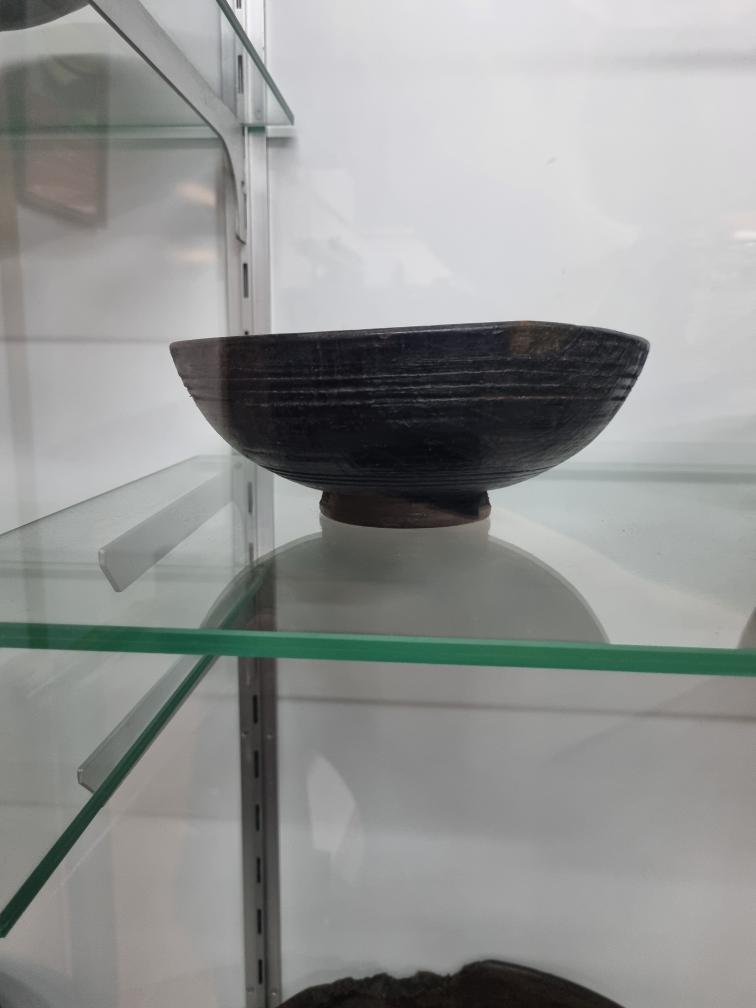
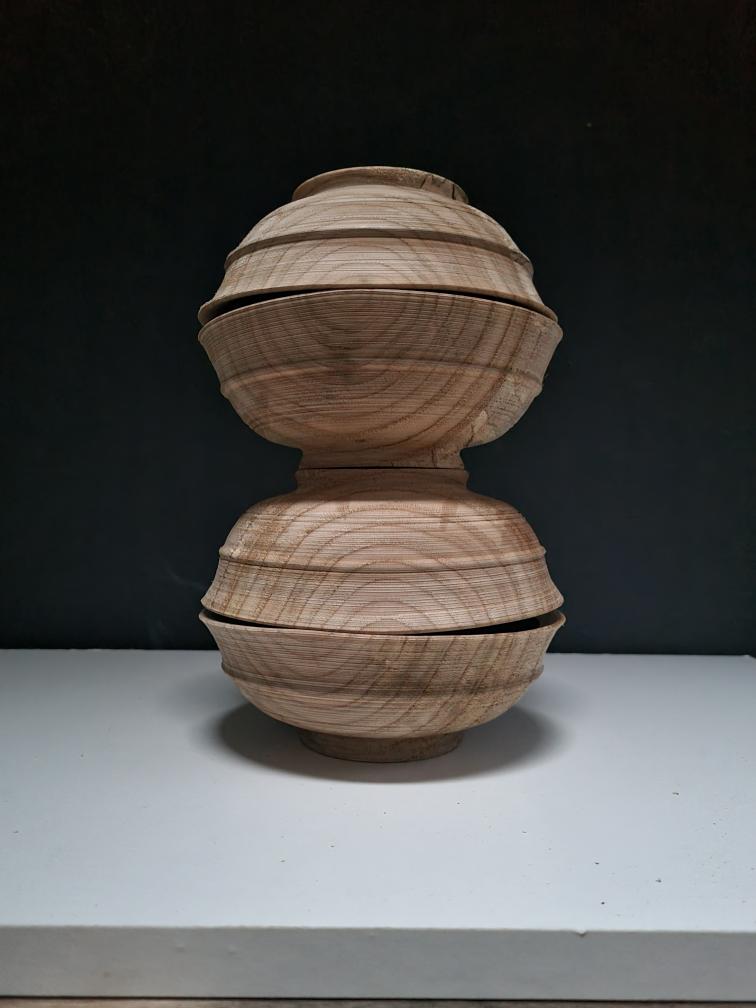
Drinking cups or ‘vasos’ were generally quite shallow (3inches deep at most) and only for cold drinks. The way Arturo makes them the rims are much thinner than I would normally make, but thicken up to 1-2mm all the way to the bottom. It was also common to have cups where one would fit upside-down on top of the other. This was to protect the thin sides when they were taken into the fields during the day for work. Goblets are called ‘copas’ and have the distinctive stem added on the underside of the drinking vessel.
‘Cachos’ were bowls specifically for drinking wine from that was passed around a group. This has echoes of wassail bowls here in the UK, or grolles in the Alps, all the way back to the viking ale bowls. They are characterised by a thin rim (for more comfortable drinking) and the overall thickness was thinner than average cuencas all the way to the bottom. They seemed around 2mm thick.
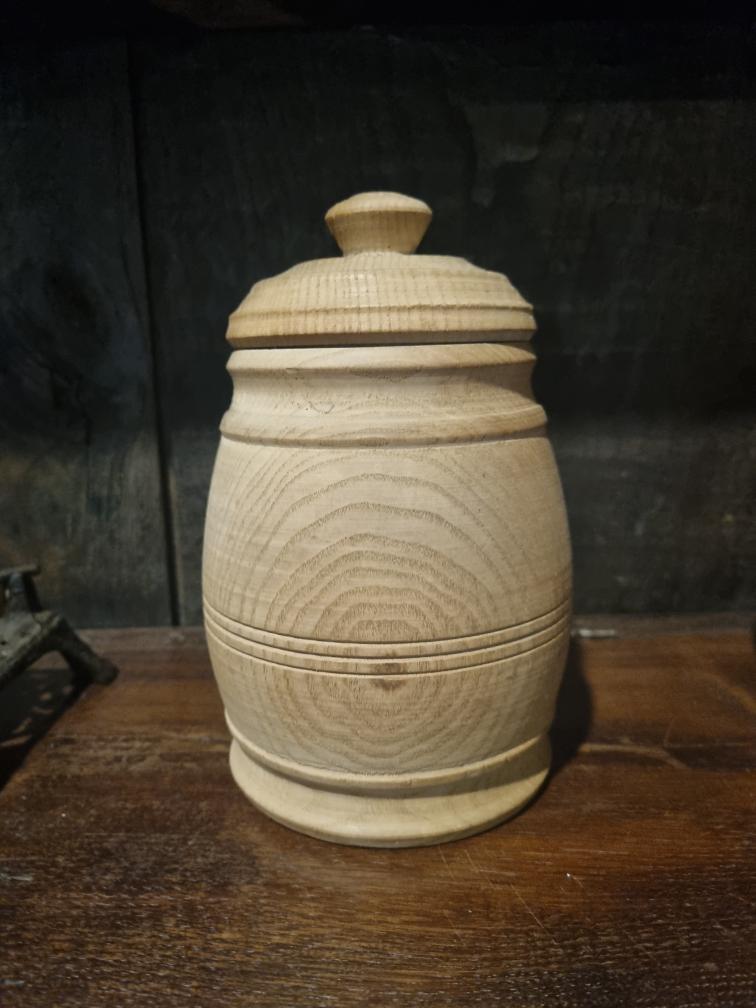
Lidded ‘Saleros’ or salt jars were a common part of the Asturian kitchen. These seemed to follow a distinctive design, and like much of the end-grain items mentioned here, they could be made with the pith still in. Although, as mentioned in a previous blog, it was not Arturo’s preference to make it in this way as the risks of leakage are so much greater.
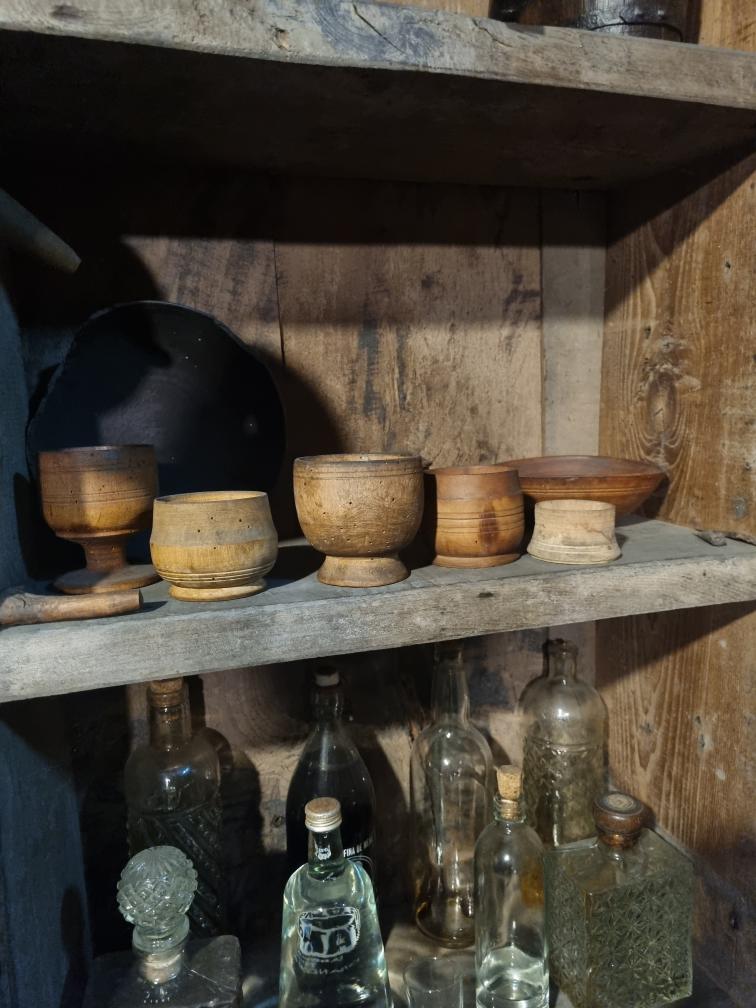
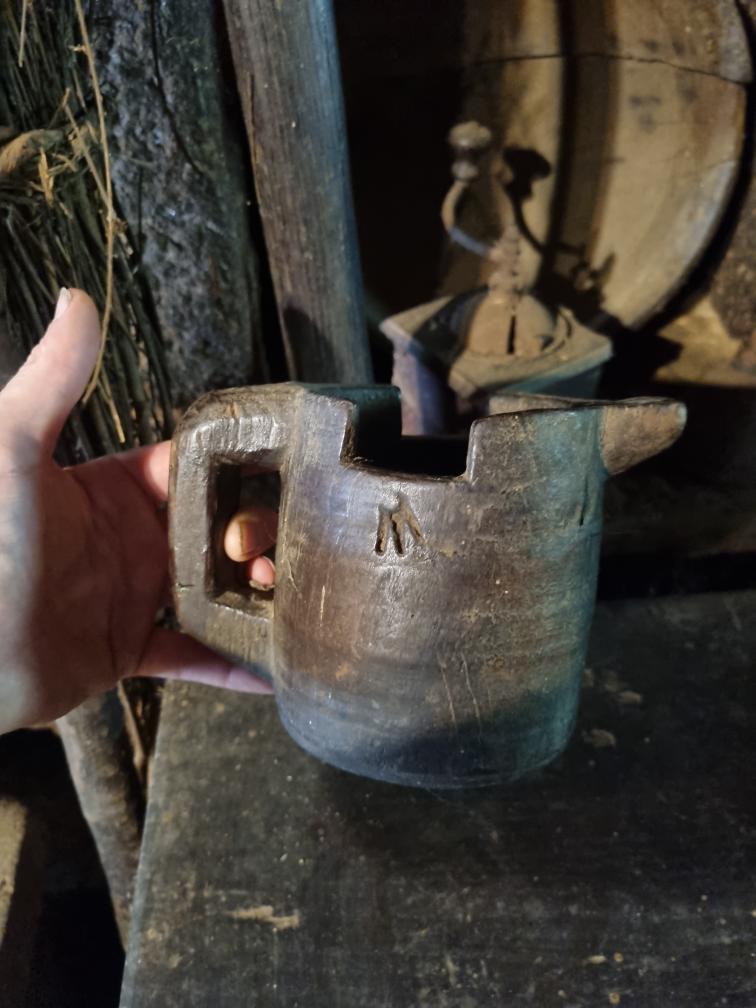
And so onto the pinnacle of Asturian woodturning (in my opinion), the ‘Jarra’ or ‘Xarra’ (pronounced ‘Char-ra’). The video of Arturo turning one of these is in part what drove Amy and I to visit him, and we were delighted when he demonstrated his methods for making one (more on that in a later blog). These were used for pouring wine and cider and we saw many examples of them in the museums we visited across the region. There was a beautifully rounded shape of the sort Arturo makes, and a slightly squarer version. The turning of these objects is what gives the pole lathe its name in Spanish: ‘El torno de media volta’, the lathe of the half-turn. Maybe we should have called the Stop-turning process ‘half-turning’?! 🙂
The funnels or ‘Embudos’ were also really impressive, made from massive pieces of endgrain wood and all one piece. These again were used in the cider and wine industries. The only wooden funnels I’ve seen in UK books (Pinto etc) were all two piece and rather more dainty. These things were the size of your head!
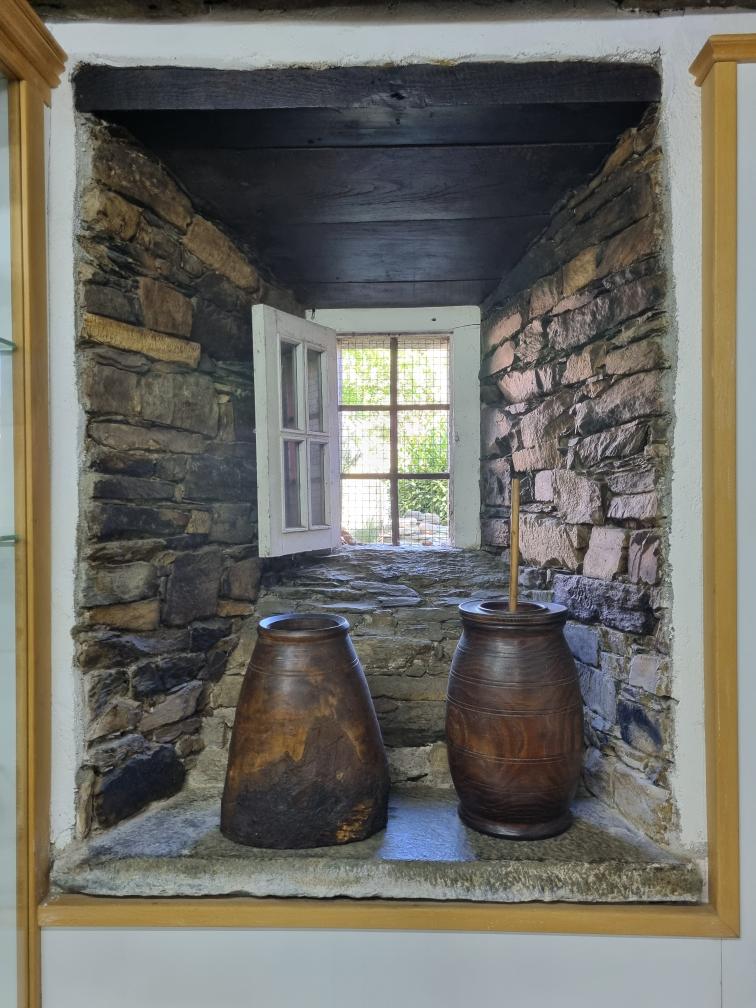
The butter churns were even bigger. These items would typically have two people on the pedal according to Arturo. It boggles that this technology was used instead of coopering, as a barrel churn is so much easier to make, but that maybe shows a little about how isolated this region was and how they found their own solutions based on the skills they had. To be sure there were coopers about, but if turning was your thing then why not turn a butter churn instead I suppose!?
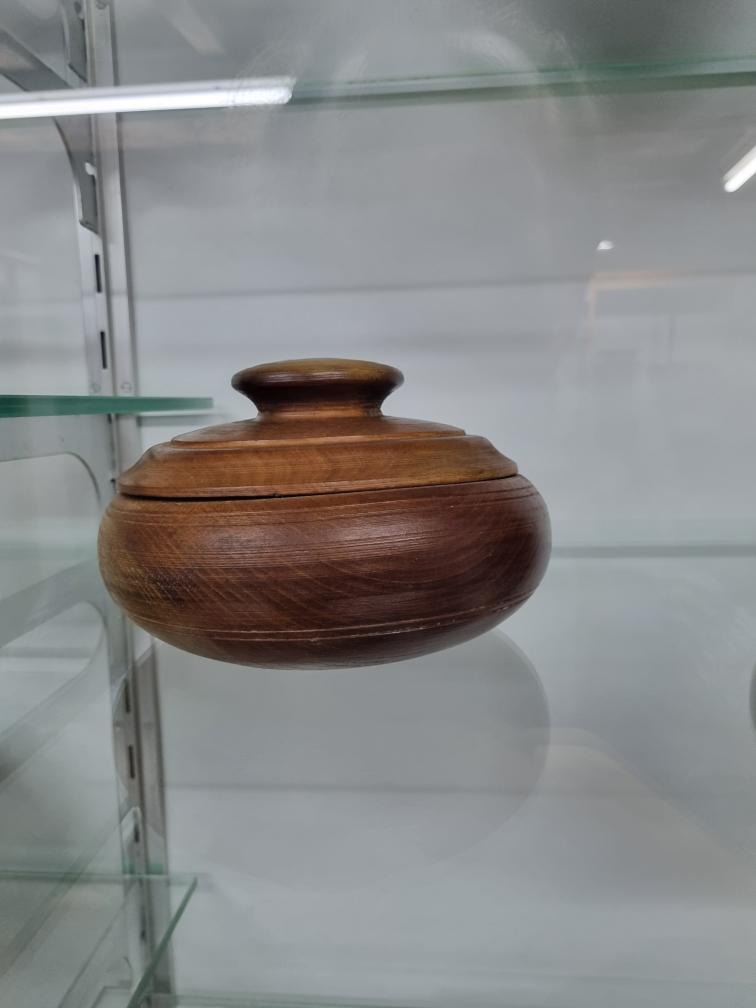
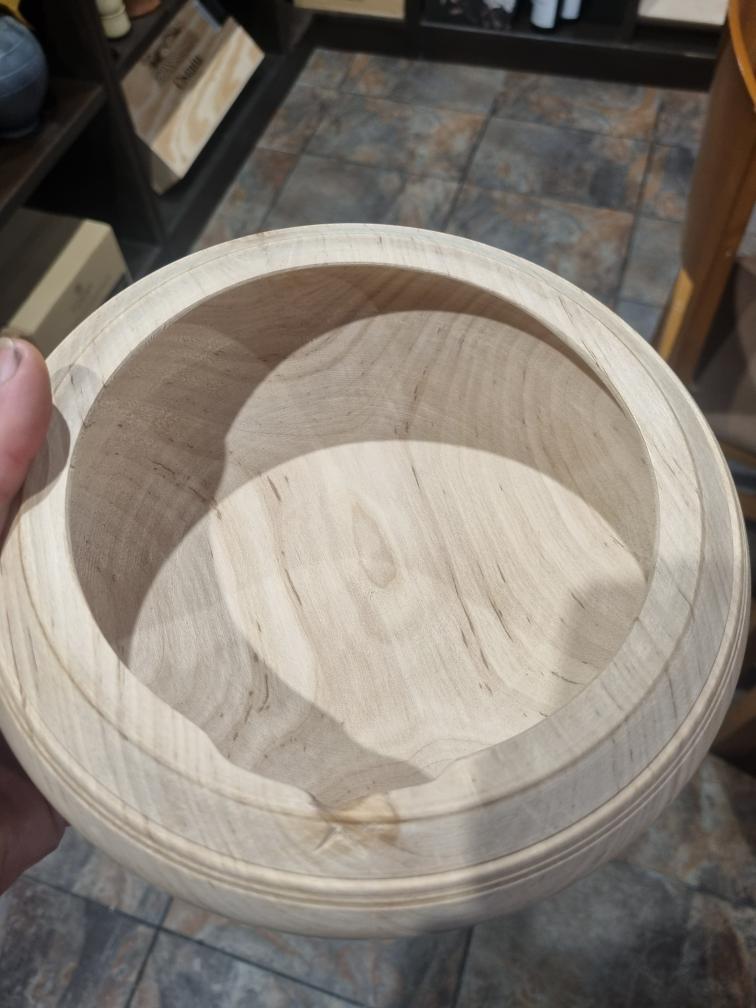
Now onto probably the three most interesting items, all of which I am itching to make (one of them I’ve already jumped straight into!)! The first of these is the ‘Fiambrera’ or lunchbox. These locking lidded boxes were used by the shepherds for their lunch. Those of you who’ve followed me for a while will know I made a lovely lunchbox which I use regularly, but I have been waiting for the right big dimension to make more of them as they’re usually made from large trees that means quartersawn wood an be used (most boxes in Sweden are made like this)… however, I have slowly learnt that in woodworking, there can always be an exception to the rule! The Spanish boxes were all made from two half logs, meaning that much smaller diameter timber can be used. This was borne out by the antique ones as well as the ones made by Arturo. Secondly, the interior of the bowl did not have a ‘shelf’ as such, but was just the culmination of the form (see photo below).
The next item is the ‘Viradeira’ or tortilla dish. This ingenious device has two functions. The first is to help turn the tortillas in the pan, hence the handle on the underside. The second is as a serving dish for the stack of tortillas. Another useful and thoroughly beautiful object that can seemingly only be bought in ceramic these days.
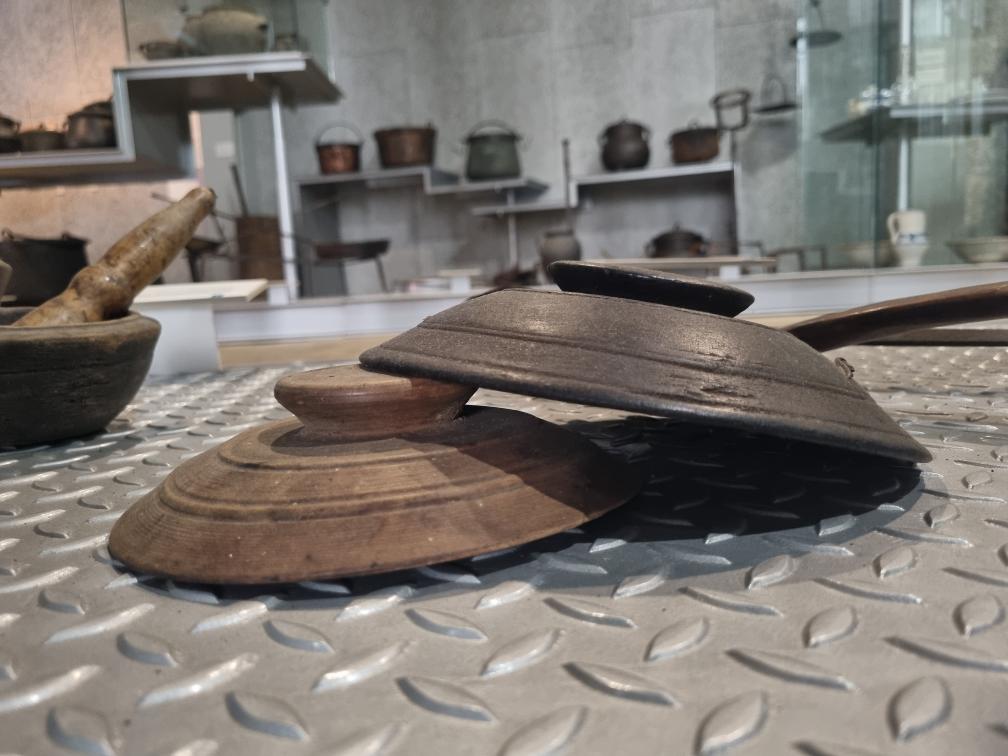
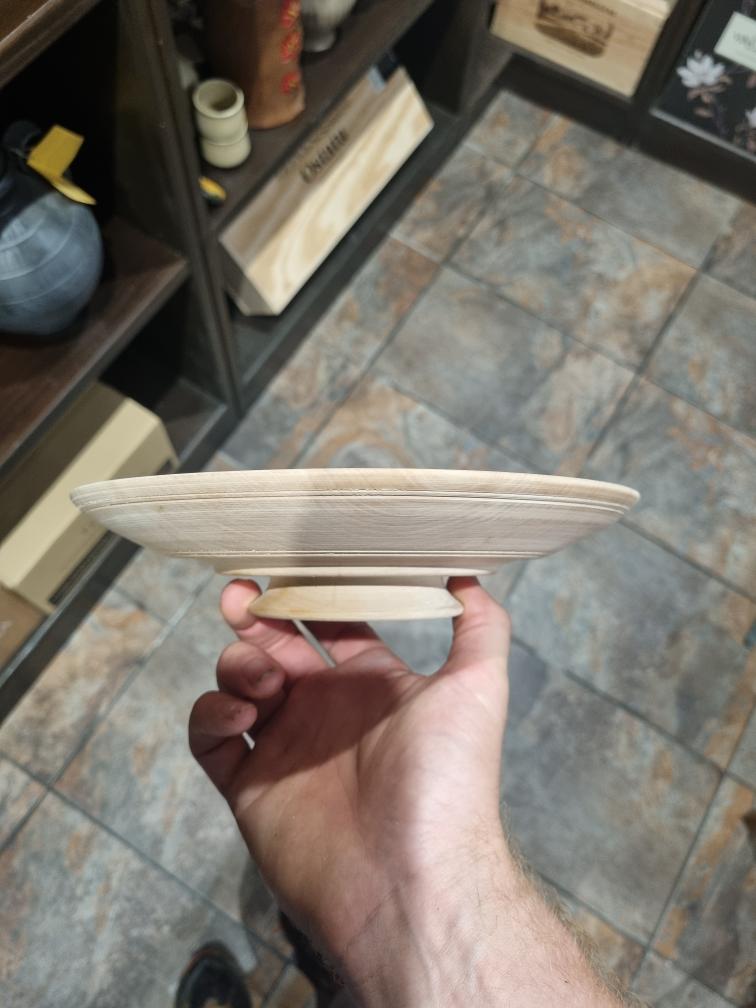
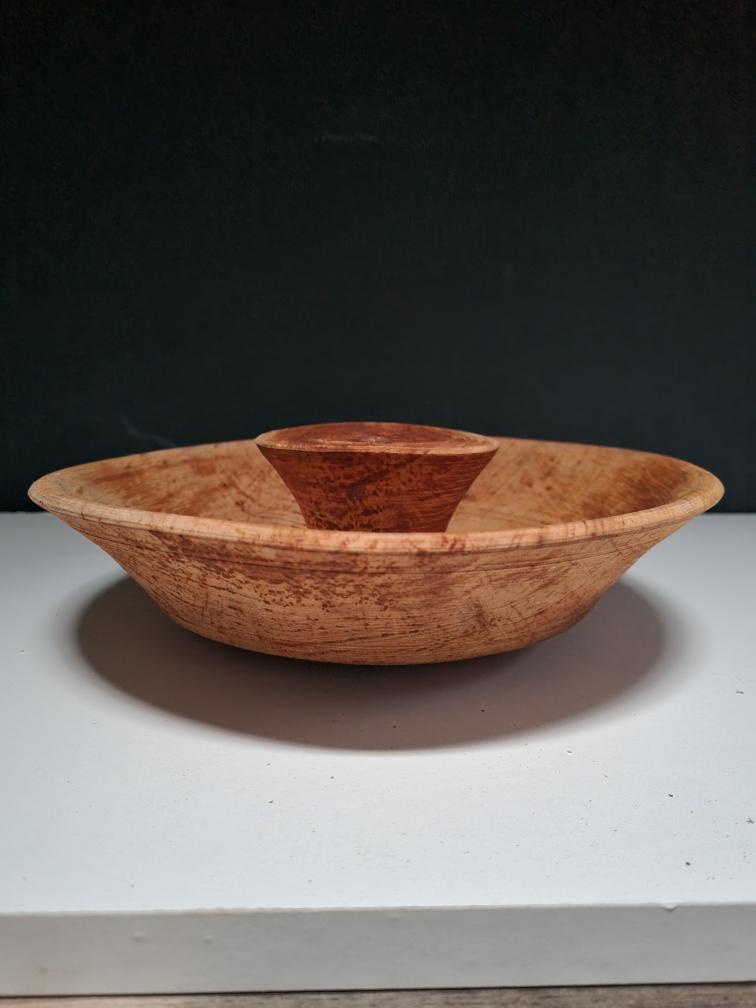
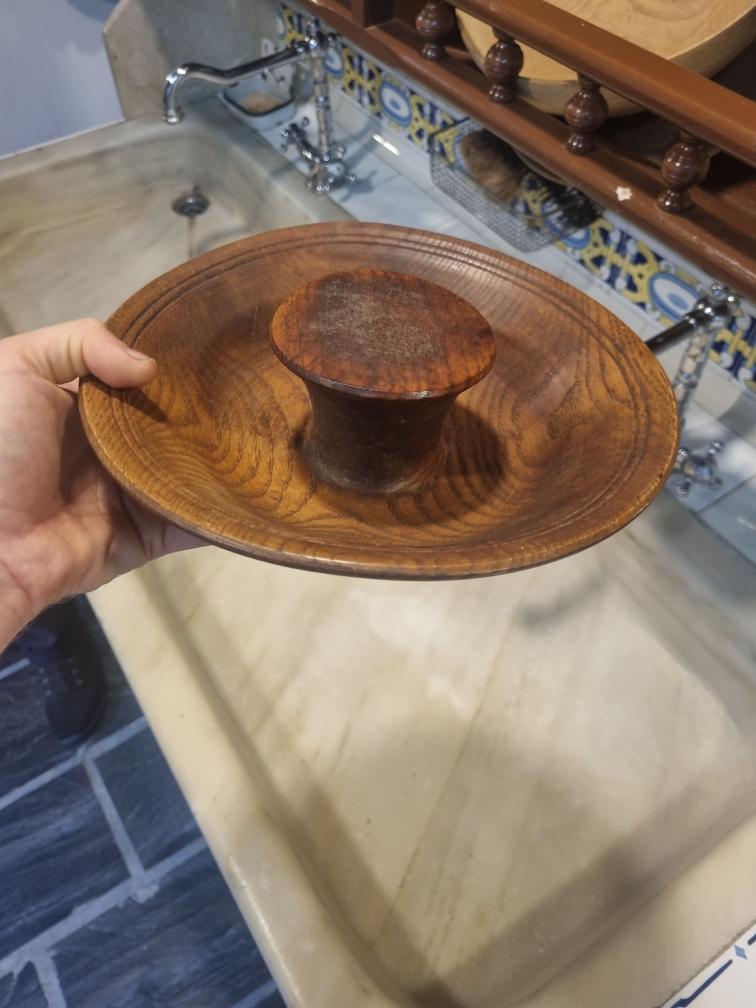
Lastly, an item which I first encountered in the book ‘The Hard Life’ by Jasper Morrison, which is a book detailing items in everyday peasant life in Portugal. The ‘Trilladeira’ or chopping board bowl was an ever present in the Asturian kitchen given they tended to not have a central table, but instead be benches surrounding a central hearth. The concept is simple, chop your veg on the block and they fall in the bowl, then tip the bowl into the pan. Perfect for slicing nuts that don’t want to stay on a flat chopping board and want to roll onto the floor! This is the item which I had to try and make as soon as I got back, driving to the Gower to get the material to make one as soon as I could. The design is ingenious as the flared body makes it sit comfortably between the legs, but also be good for pouring into the pan. The central part sits slightly proud of the rim for easy cutting. It does involved quite a bit of wood wastage though to get rid of the mandrel spikes! Both Amy and I plan on making more of these, get in touch with either of us if you’d be interested in one!
The crazy thing about these forms is how they were perfectly designed for functionality, beauty and ease of making. A process honed over millennia of use. Thanks for reading, and hopefully you’ll be as inspired as we were to come home and to start making! Let us know in the comments if you had a favourite item listed above!