
Bodgers Ball Review 2026
The other week it was the Bodgers Ball. A series of instagram posts doesn’t really do justice to this event, so thought I’d do a little post about it.
The Bodgers were a group of chair-leg and stretcher makers who used to work in the woods above High Wycombe turning green beech. By working in the woods they minimised costs of both transport (of raw material) and workshop space. The last one retired sometime around the late 1950’s. About thirty-six years ago a group of green woodworkers got together and formed a new organisation affectionately called the Bodgers (now the APTGW – Association of Pole Lathe Turners and green Woodworkers). Each year, in the second weekend in May, they hold a gathering called the Bodger’s Ball. It moves around the country to different locations, and this year it was held at the Avoncroft Living History Museum just South of Birmingham.
Avoncroft is a very special site and well worth a visit anytime of the year. It feels really special to be amongst all these old buildings, which have been painstakingly moved to the site over the years. It is a timber framer’s dream!
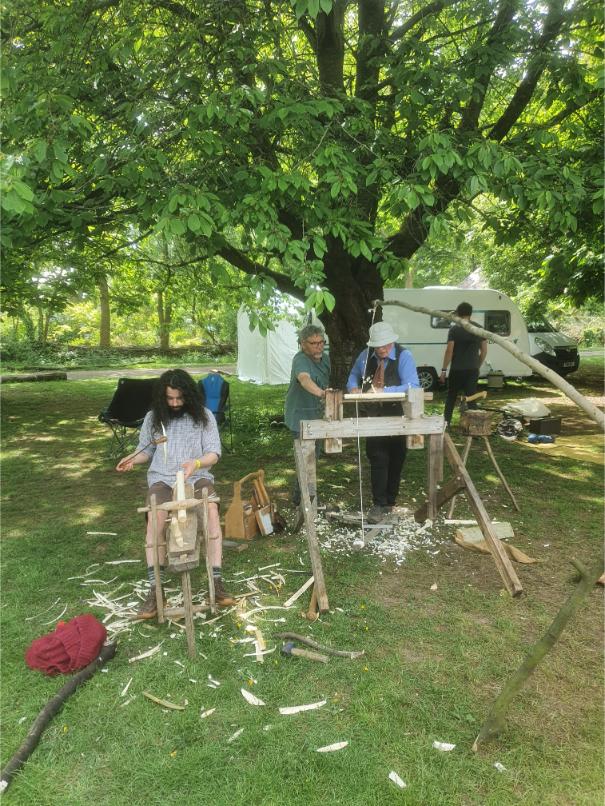
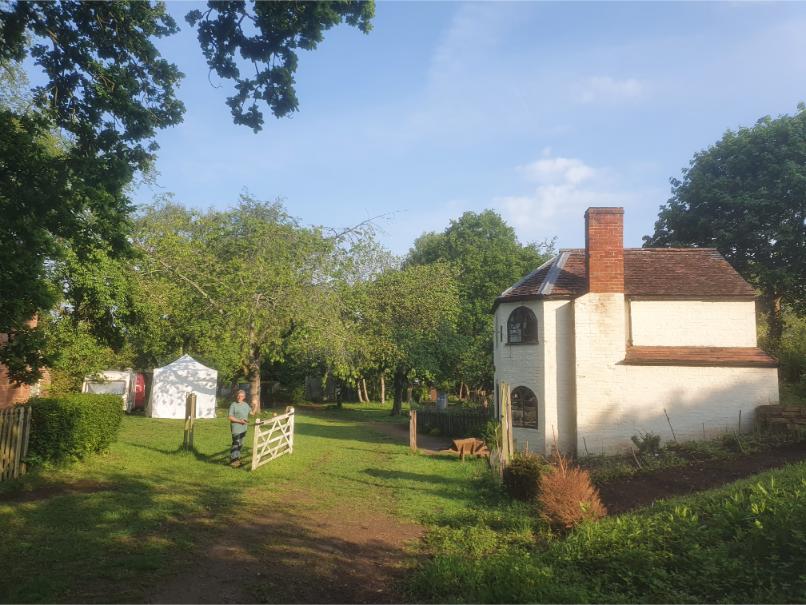
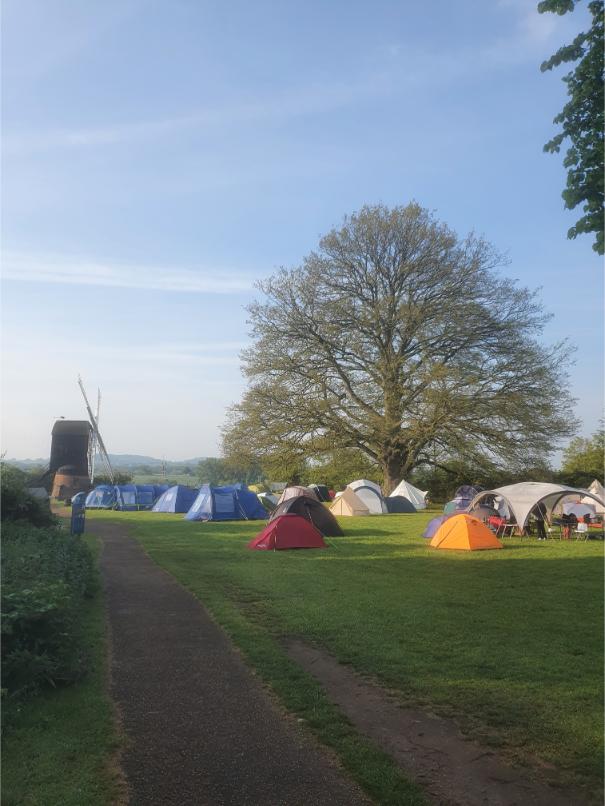
I arrived on the Wednesday and set up my tent, marquee and the new ergonomic lathe ready to teach the following day. I always love turning up these events early as it is a chance to catch up with fellow tutors before the number of people in attendance ramps up over the coming days.
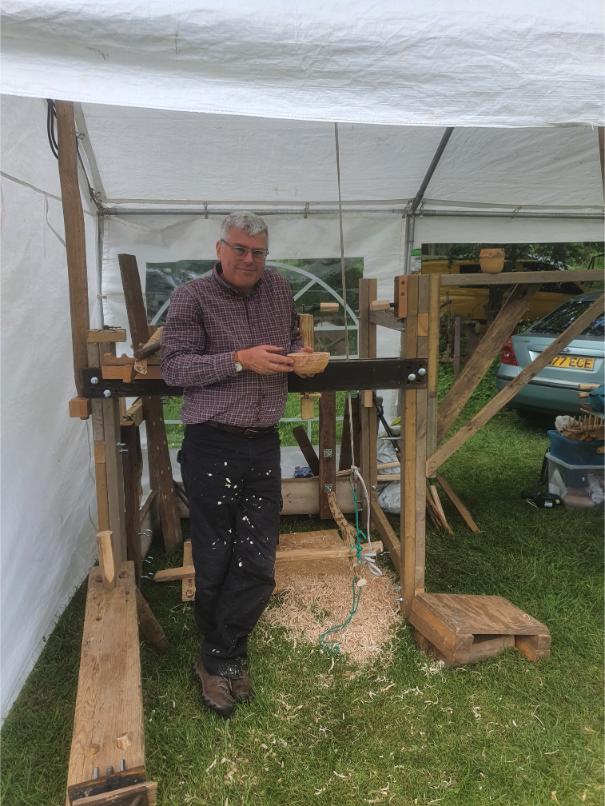
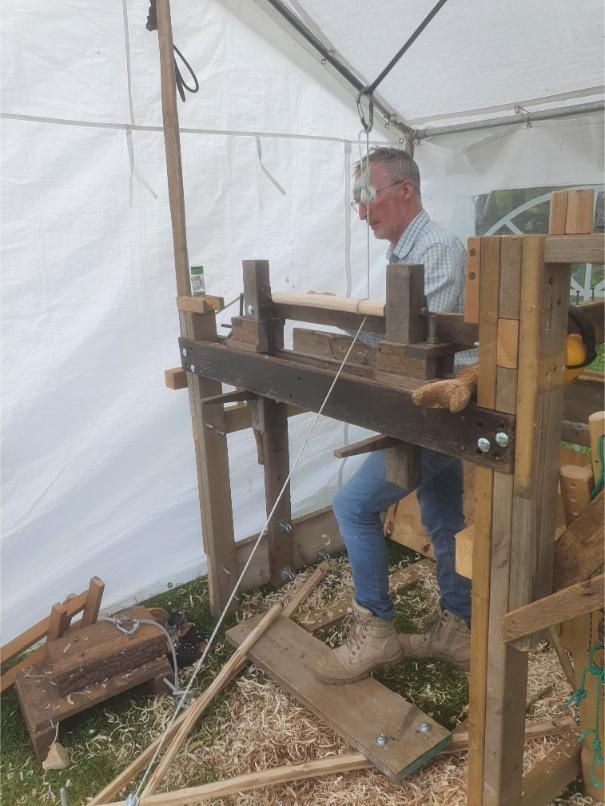
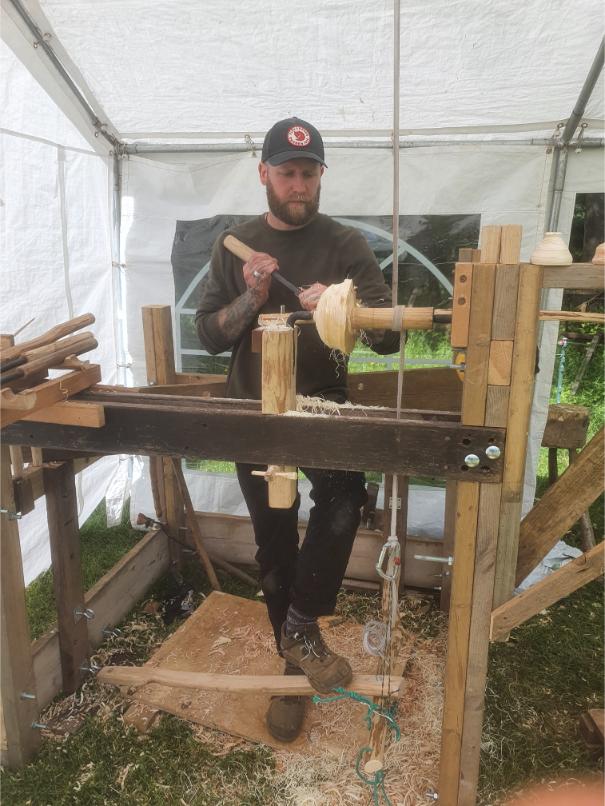
On Thursday, I taught my class. I had capacity for two people, with a vision of sharing how to turn bowls using the new ergonomic lathe. I find it takes some time to adjust to using it, so I was hoping to accelerate that process for some more experienced turners. As it was, I only had one attendee, who had never turned a bowl on a pole lathe before. I am really keen on giving beginners the best experience possible of the pole lathe, and so I looked forward to how Peter would find it as an experience. We set up the lathe for their dimensions and began. I have found it quite difficult the past year teaching people on my old lathes, which I know can be so uncomfortable. I’m pleased to say that my student, Peter, turned a great bowl and at the end of the day when I asked him if he was sore and aching anywhere, he replied that he wasn’t.
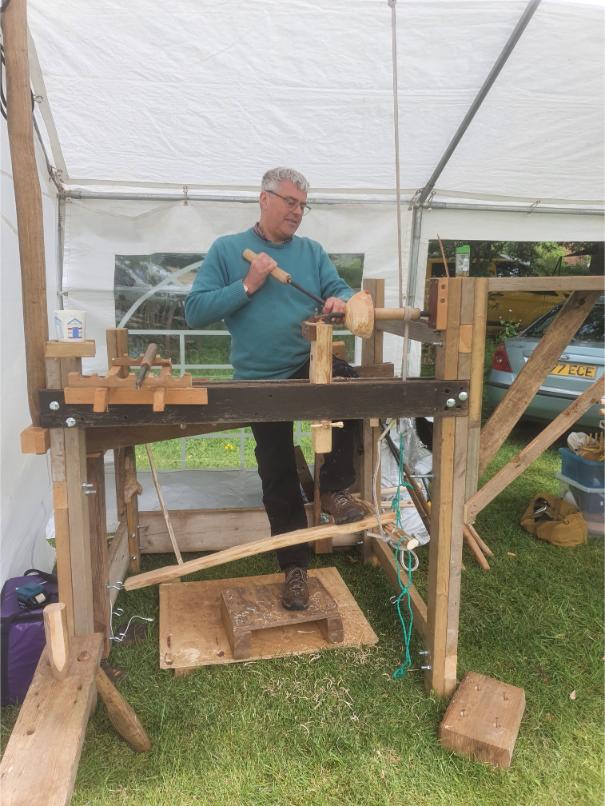
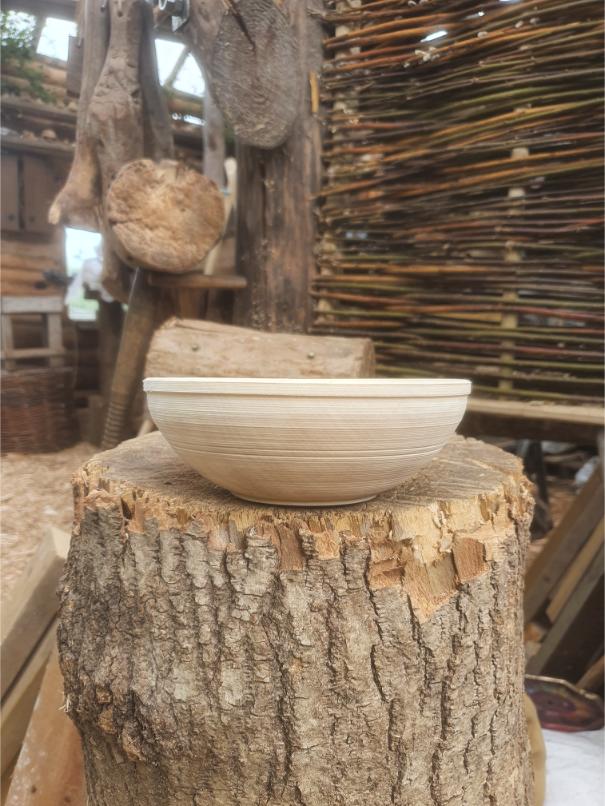
I was lucky to have a free day on the Friday, and so turned bowls all day interspersed with popping by various other makers across the site for our yearly catch-up. I find these events are so important for the sharing that occurs in these brief snippets of conversation and always leave inspired. Given the log to bowl event was the next day (more details in the next paragraph) I was interested how fast I could turn on the new lathe. As well as being more comfortable I am aware it is much more efficient with me being much less tired after each bowl as a result and able to turn fast for longer without getting tired. I chose a pre-axed 6” lime blank (very soft) and set the timer going. I was frankly gobsmacked to find that a relaxed 11 minutes later I had a bowl.
This gave me confidence going into the main event on the Saturday afternoon. The log to bowl event is a yearly competition to axe and turn a bowl as quick as possible. Armed with my new Thornwood Forge Merlin axe which feels like an extension of my arm, plus my knowledge of how yesterday’s lime bowl had gone I was quietly confident. Then I saw that it was a 7” blank… people often ask how long it takes to turn a bowl and the size really does make a big difference, particularly in my experience on the older less efficient lathe. The last time I raced doing one this size it took 29 minutes. That was beech though and this was sycamore, so I set myself the target of beating that year’s winning time of 21 minutes and abandoned thoughts of a sub-15minute bowl which has always been my hope. I had a big crowd watching me and supporting me (thank you all!) and honestly I couldn’t have asked for it to go any better. I managed to axe a very accurate blank and in two passes with the hook tools from bottom to top, I had the outside surface complete. The inside turned out without hitch as well, the sharp hook tools churning out the sycamore shavings at an alarming rate. The clock stopped at 16mins 1second and the last 30 seconds of that was running to hand the bowl in to the judges. I was as amazed as everyone else, I had thought it’d be a lot slower. If it was a 6” blank, I think my aim of sub-15mins should be very possible. Amazing to think that a few years back we all thought that would take quite a while to achieve! I think that the new lathe saved at least two minutes on my previous time mainly due to the more efficient pedal and transfer of power through the backrest. Now my target has dropped to sub-13mins. That should keep me occupied figuring out how to get there. A mention of the other racers too: I find it is a great chance to challenge yourself and notice improvement on the previous year. Good to see so many others taking part once again. James Pumphrey (who taught me techniques to go faster) came in second in around 21 minutes and Billy Watson turning for the first time in the event finished in 25minutes despite his mandrel coming loose. Also big thanks to Doug Don who has judged it for the past couple of years, and glad that I managed to avoid the errors from previous years that have seen me lose marks and allow me to finally win this event.
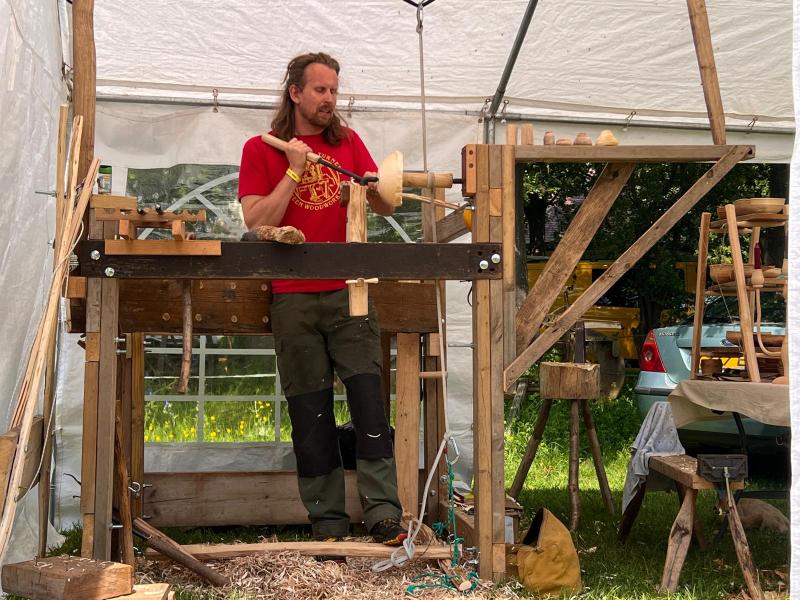
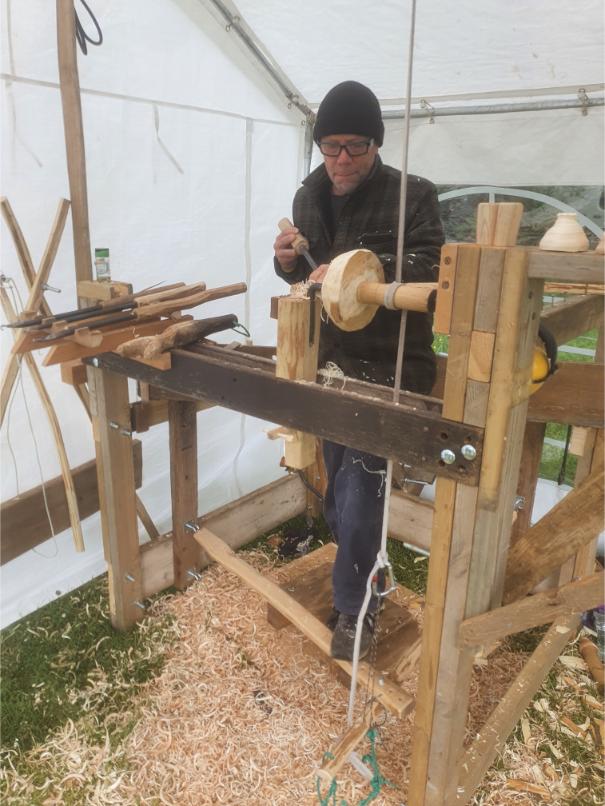
Later that afternoon I did a very well-attended demonstration of the ergonomic lathe with lots of interest from turners who have stopped using the lathe as a result of pain. There were also quite a few experienced turners now interested in the efficiency gains from the lathe. At the end of it some spindle turners got behind the lathe to try using a backrest for the first time and they quickly realised its potential. On a more sober note, I was also approached by a physio who was concerned by the positioning of my standing leg whilst using the new lathe for my hip, and I’m glad that I’ll be able to have Joanne’s advice going forwards. The last thing I want is to injure people once more in a new way through not fully understanding the ergonomics. Much work is ahead of me, but I hope to have an e-book with detailed lathe plan available to purchase by the end of July.
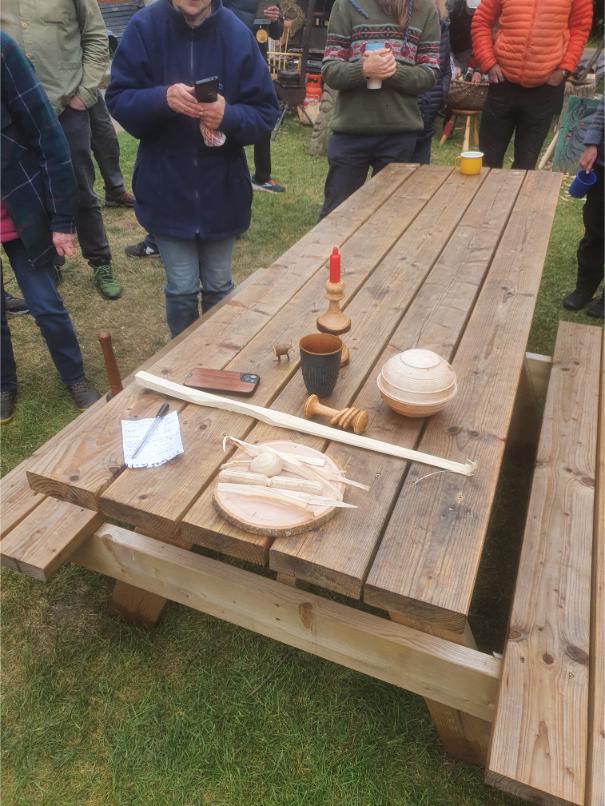
I spent the rest of the Saturday afternoon admiring the incredible entries into the craft competitions and the evening had a very special session round the fire with many sharing songs and stories that those that stayed found hard to leave, The mega jug also returned to feed all the thirsty bowl turners with the fine ale on sale from the bar.
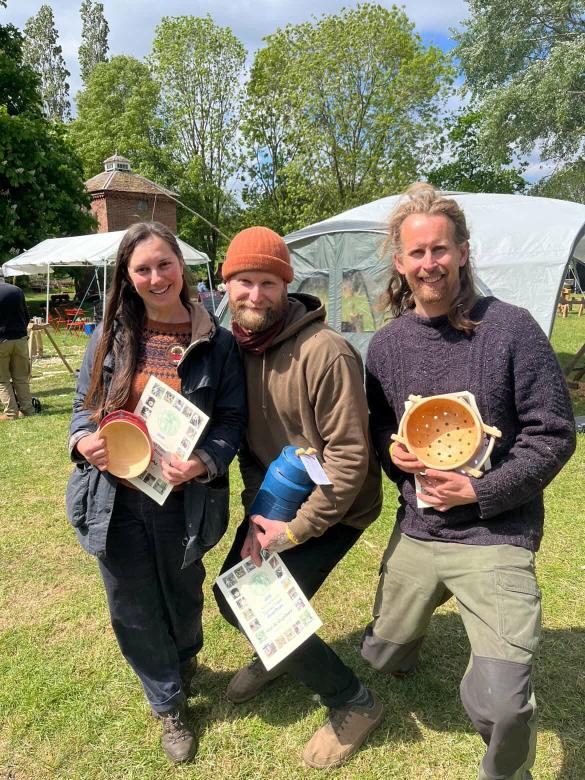
On Sunday, the rescheduled half hour challenge took place which I was delighted to also win, turning two 6” alder bowls from pre-axed blanks. I always like to challenge myself with this competition and next year it’ll either be to turn two bowls of the same size from the log, so all axing and scribing included, or it’ll be to turn three pre-axed blanks. I know I am barely capable of both at present, but with some tweaks to my process and design, I may be able to manage them next year. The main way I see to save time is to improve at nesting to reduce the hollowing time. A recent conversation with a fellow turner has also identified that optimizing mandrel diameter could help too. After this event it was the prize giving for the competitions where I was lucky enough to be judged second for my colander to Nico de Wispelaere in first and Amy Leake in third. Then the craft market took place and bought a lovely eating spoon from Paul Adamson , and just as the market was ending I sold my first steam-bent candleabra! This was a great ending for a great event.
Thanks to all the organisers and look forward to seeing you all (and perhaps even more people) again next year!
If you were there too and want to share comments about how you found the event, then I’d love to hear them!