
Dining Centrepieces
A series of items designed to enhance the dining experience. Made to both be functional for many years through careful timber selection and design, yet also beautiful enough to be admired on view for all to see. All my items are turned on a pole lathe giving a unique tool finish to each item.
Candlesticks – An ongoing series of candlesticks inspired by the shape of a tulip. These candlesticks were first envisaged as an attempt to make something from wood that is typically made from metal, starting with the candleabra. The strength of the thin wood encouraged me to make more, with designs becoming increasingly organic.
Cauldrons – To begin with this was an interrogation of the dutch oven form that I first saw in a museum in Scotland from the Roman era. It is rare to find a form which has endured for so long. Once again an attempt to make something from wood which is typically metal. I envisage this series of cauldrons eventually resulting in an item which can be hung on the wall of your dining room, and when the occasion requires, make a unique serving dish to present food in whilst keeping that food warm.
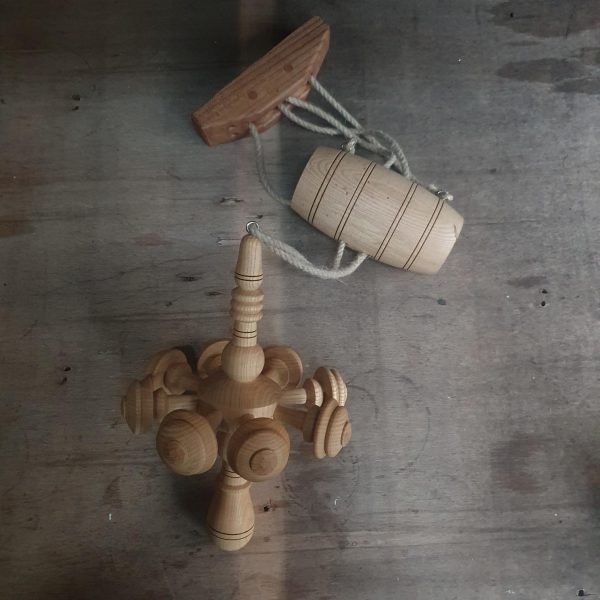
Porte Cuilliere – A traditional spoon rack based on those used in Brittany and much researched by Jane Mickelborough.
Candlesticks
Usage notes here. Makers notes here. To purchase or for further enquiries with any of these sculptures, please get in touch.
Nb. The single-stem and all-white candlebras have a normal postage rate of £6. These two products can be bought directly through my online shop. If you wish to purchase any of the steam-bent candlestick sculptures, or have further enquiries, then please get in touch. Postage&Packaging costs for these are a £40 flat rate to the UK. I will aim to get it posted to you within five working days.
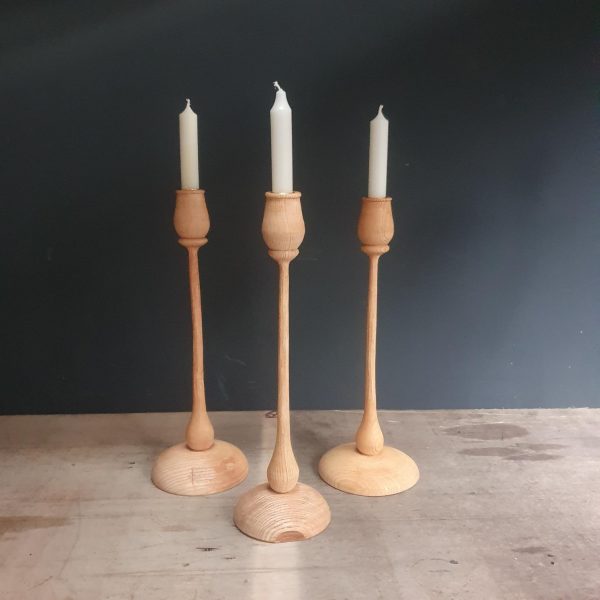
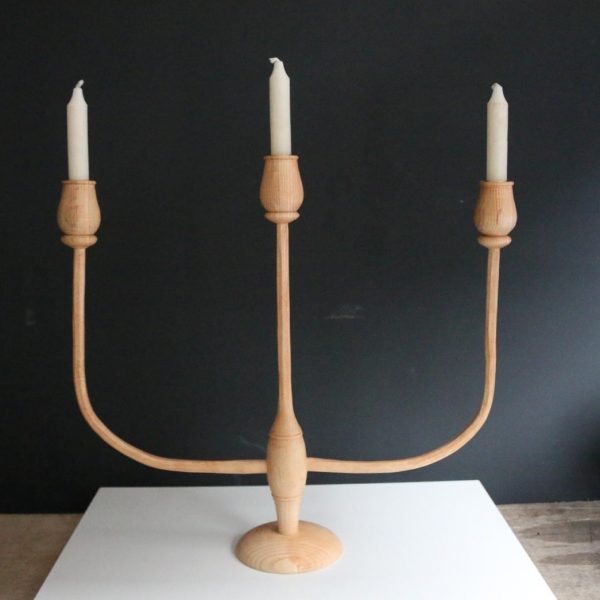
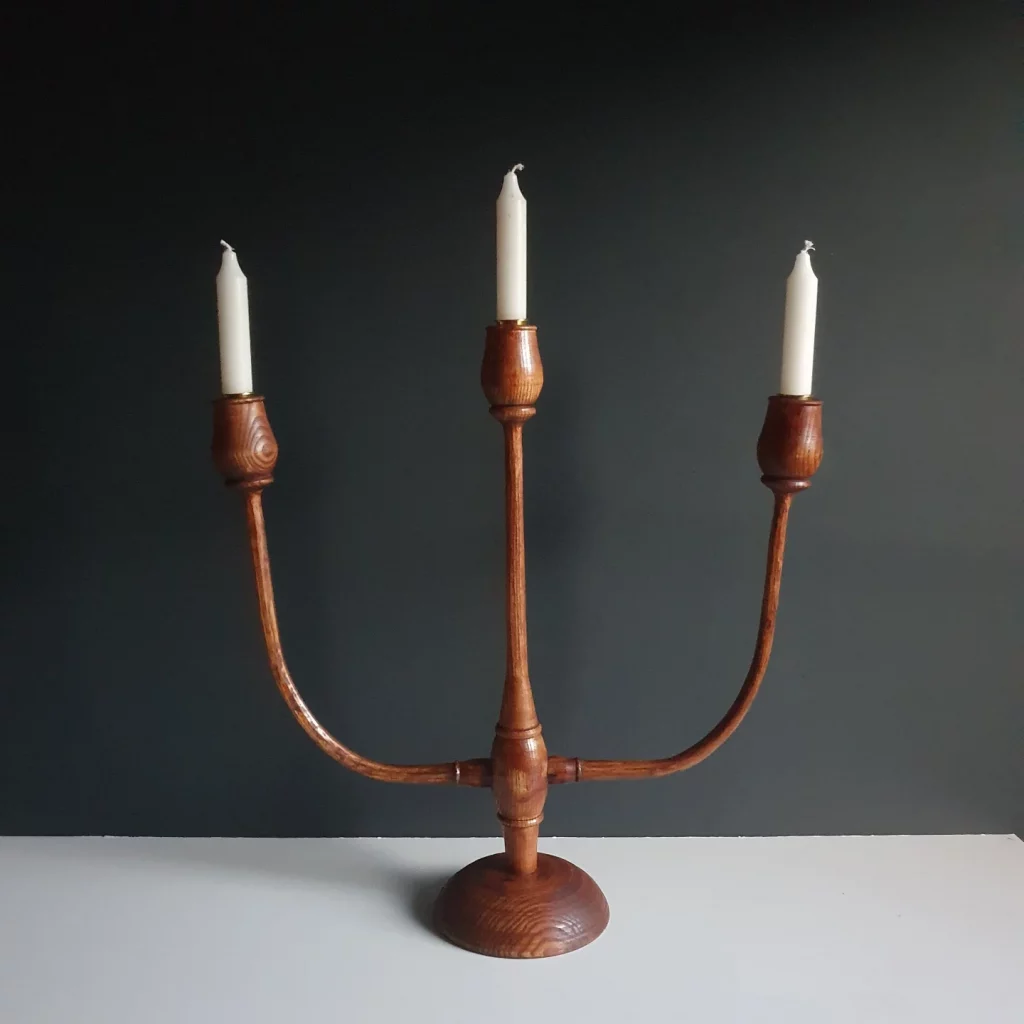
£1500 – Available
The original concept behind this series. It is finished in a natural wiped urushi lacquer finish to highlight the grain.
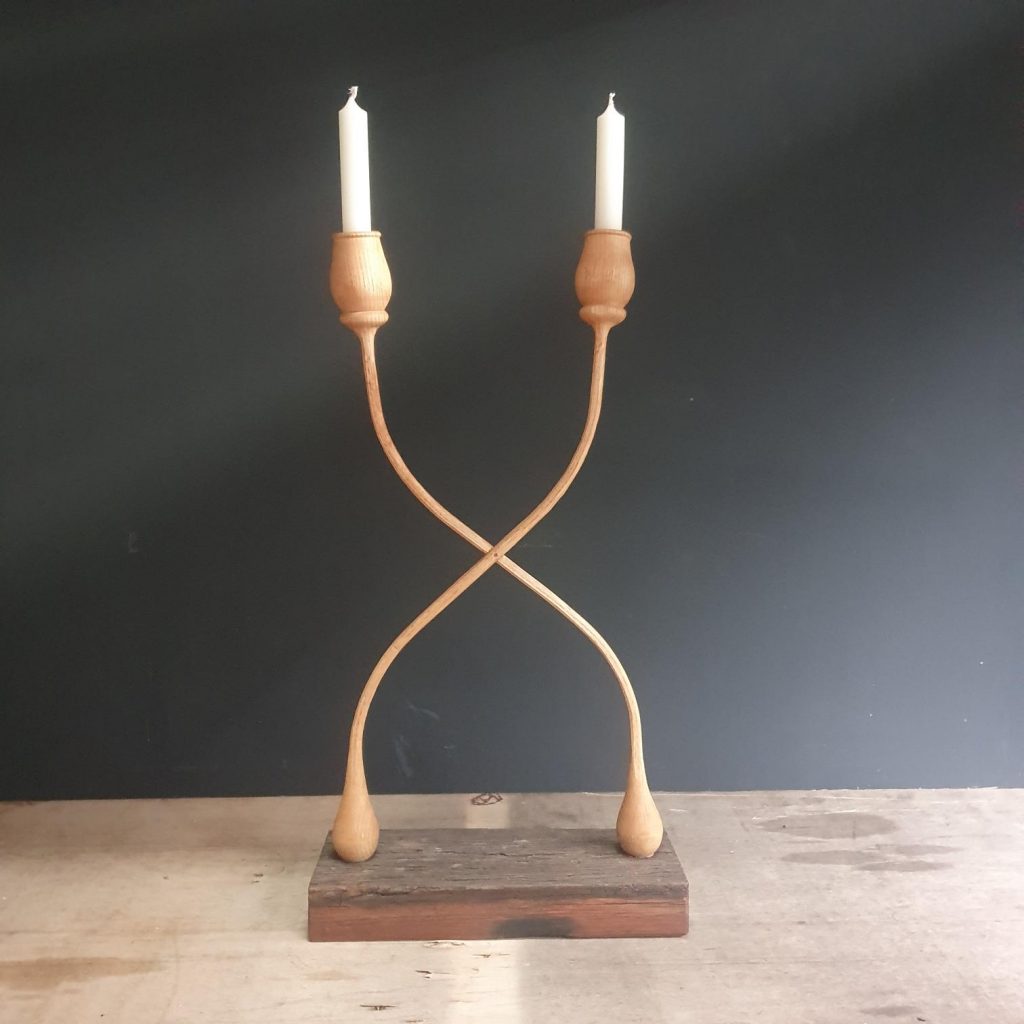
£1250 – Available
Dance partners forever locked in an embrace. Ash and jarrah base (which was the deck for 30 years on the SS Great Britain in Bristol).

£1750 – Available
Mind-boggling double bend in ash with chestnut pegs and jarrah base (which was the deck for 30 years on the SS Great Britain in Bristol).
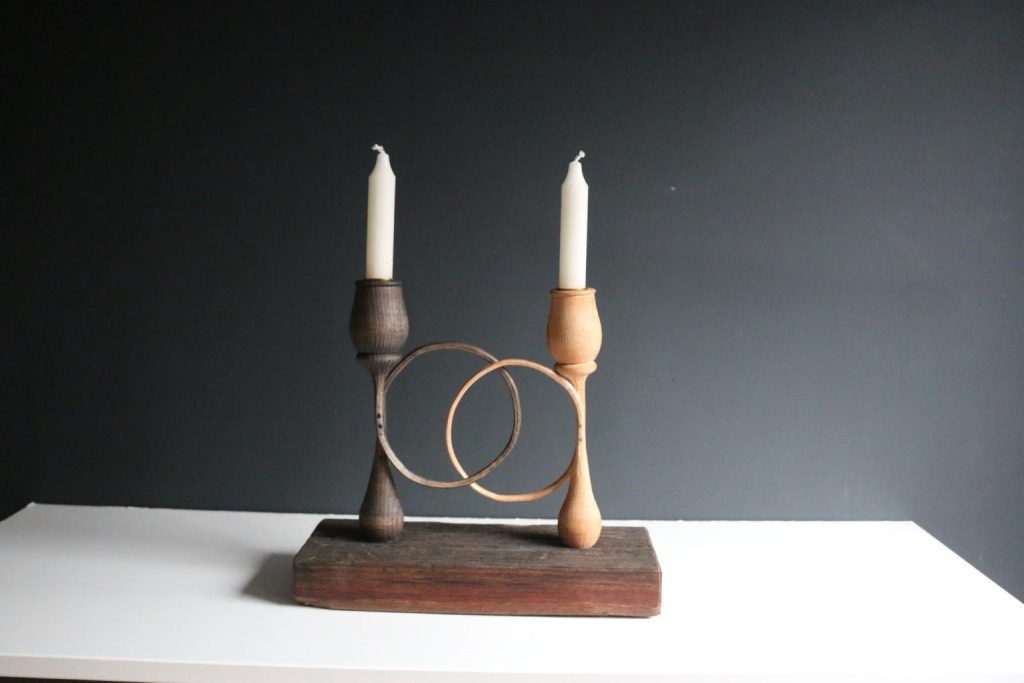
£1750 – Sold Out
Mind-boggling double bend in ash and ebonised sweet chestnut with chestnut pegs and jarrah base (which was the deck for 30 years on the SS Great Britain in Bristol).
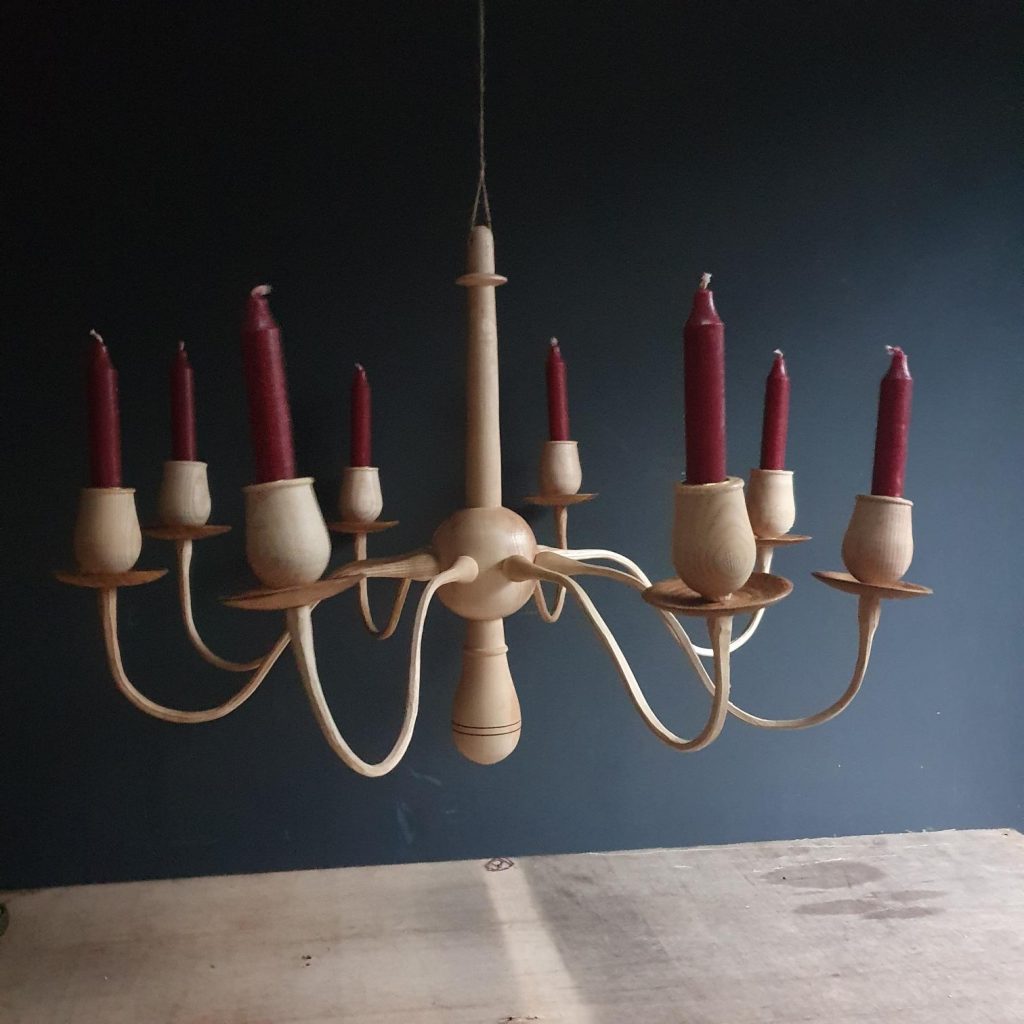
£3495 – Available
The logical extension to “The Candleabra”. Ash with oak catchment dishes. Winner of People’s Choice Award at Wizardry in Wood 2025.
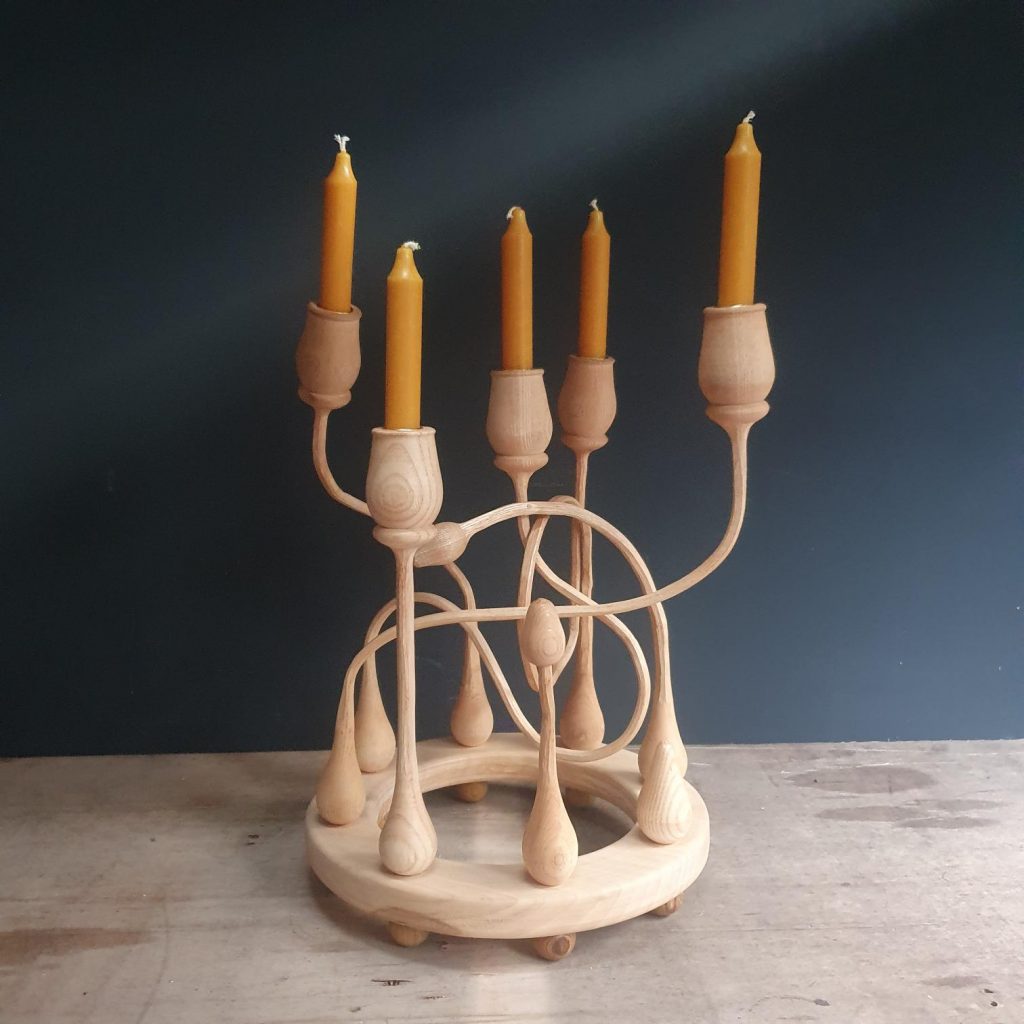
£3995 – Available
A piece celebrating the natural wonder of our annual flowers. Reaching and sharing light before retreating once more into the soil, to once again spring forth. Maple ring with ash flowers and labernum ‘rootballs’. Featuring the first bend in 3D I have done. Made for the Yeoman’s Competition at Wizardry in Wood 2025 whose prompt was ‘Growth, Ambition, and Renewal’.
Cauldrons
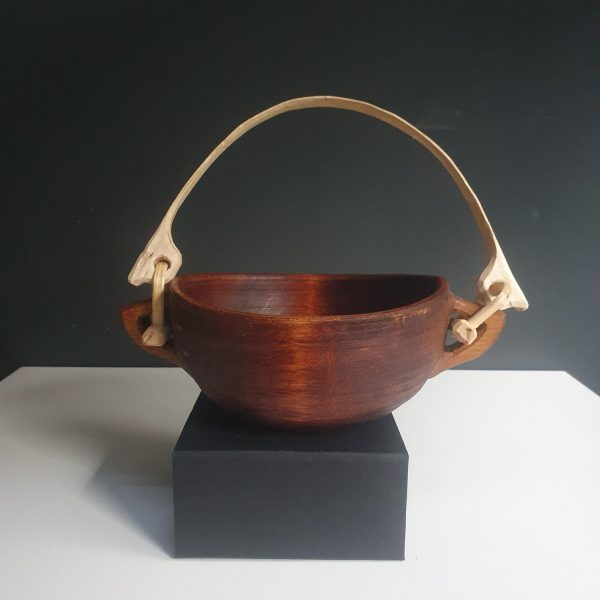
Porte Cuillieres
Candlestick Usage Comments
When lighting a candlestick, ensure you melt some wax in the metal cup first to hold the candle securely in place. You may need to carve away a little of the candle first, to make it fit securely in the cup.
Be sure to extinguish the candle before it reaches the wood.
Best used indoors away from any breeze which can cause wax to fall down the side of the candle.
To clean the candlestick, wait until the wax is dry and then chip at it with a small wooden stick, then wipe clean with a towel. If it is not coming off easily you can hold an ice cube in a cloth next to the wax and that’ll help. Please take care as some of these are quite delicate.
How were the candlesticks made?
All the numbered Candlesticks are made by turning the flower and the blub of the tulip, then carefully thinning the stem down using a drawknife, before steam-bending the green wood into a form which makes up the frame of the candlestick. This is then left for a week and tenons are re-carved before assembly. Unless stated each has had the pinky-red, sandy bedrock of my workshop rubbed into their grain to highlight it and connect it to my space and processes.
Un-numbered candlesticks either involve no steambending, or are made by steambending a separate stick and then jointing them into pre-turned items.