
The UK Bowl Project
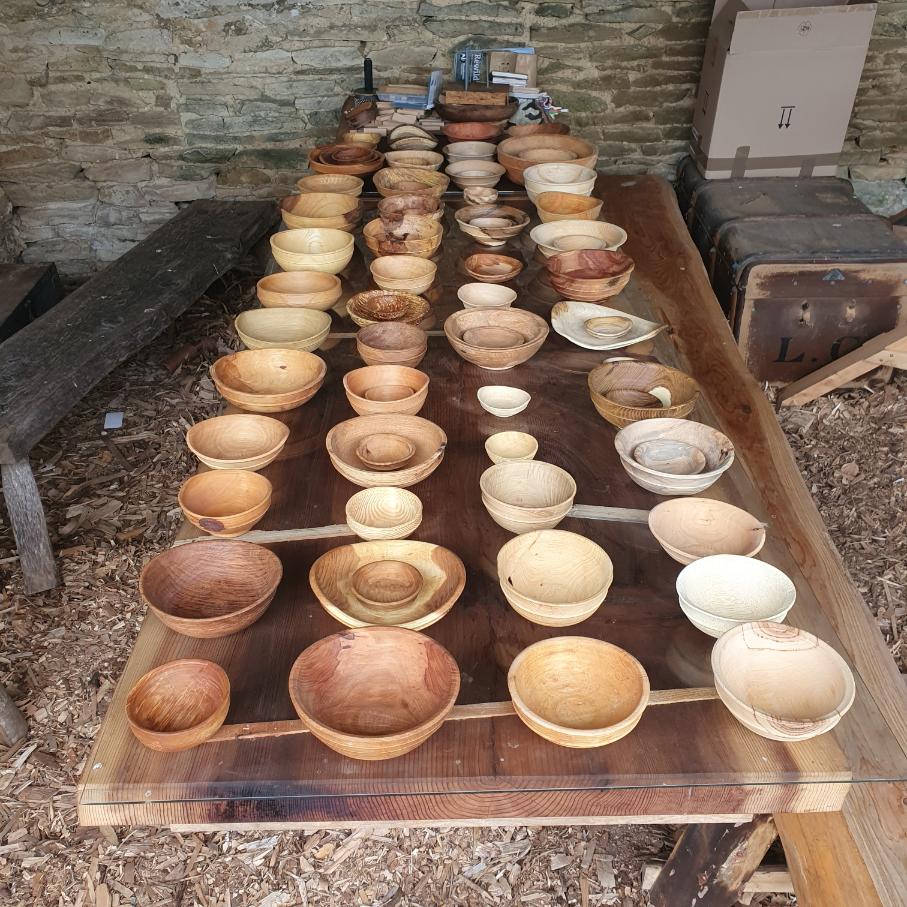
This blog post is about something I’ve been working on since 2022 and which is nearing completion. The name may still change, but the premise is thus: Turn 100 different uk-grown woods into bowls. The only hard and fast rule is that they must be grown in the UK. In an ideal world each wood has come from a different source. I am also striving to minimise mail-posting blanks, instead allowing it to evolve more organically.
This project began under a different name as the 52 weeks 52 bowls project. This happened once a week for the whole of 2022 and retrospectively seems the biggest moment that saw me evolve as a maker. It properly smashed down many of the walls I’d built up around myself. It seemed too important to stop and so I continued, albeit at much slower progress, and currently, I have turned around 93-94 different woods.
Initially the premise of this project was two-fold:
- To display the beauty of the grain of wood grown in the UK as a response to the perceived common practice of many woodturners to buy blanks from abroad.
- To gain an understanding of how different woods behave.
The intervening years have introduced me to many woodturners than I thought who predominently turn UK-grown wood already. Some of those who still predominently turn shop-bought ‘foreign-grown’ blanks, do so as they lack the knowledge or contacts to process those blanks themself. In addition generally a wholly UK-produced blank will be more expensive than one done in a country where labour costs are lower. As regards my second aim, I’ve also learnt that turning one bowl from one tree does not in any way mean you know everything about that wood. I have definitely learnt a lot, but I’ve also learnt there are many factors which affect the way the wood will work and what it is good for. These factors include:
- The rate of growth of the tree
- The minerals and soil it grew in.
- The sub-species of tree (there are over 300 oaks for example).
- How wet or dry or spalted, the bowl was when turned.
It’s kinda funny as well, because as I turn more woods, I find I want to focus on only a few. Woodturners in the past would have used what was local to them and optimised their products and tool bevel angles for that material. This kind of deep intense relationship and knowledge of a material is something I am drawn to. There are simply too many woods to know about them all! It is telling that when asked the question ‘what is your favourite wood to turn?’, my answer is no longer ‘beech, cherry or box’ (or my friend Alistair Park’s answer of ‘beech, cherry or a wood I haven’t yet turned’), but instead I reply with another question: ‘What object am I turning?’.
So, in summary, I did a project which was a fairly passive aggressive response to a problem which doesn’t exist to the initial extent to which I’d presumed, and produced a data set (of one) per tree which told me something but no means everything about that species. And yet, this was an incredible project and something I’d recommend to other aspiring or established makers. Here is why.
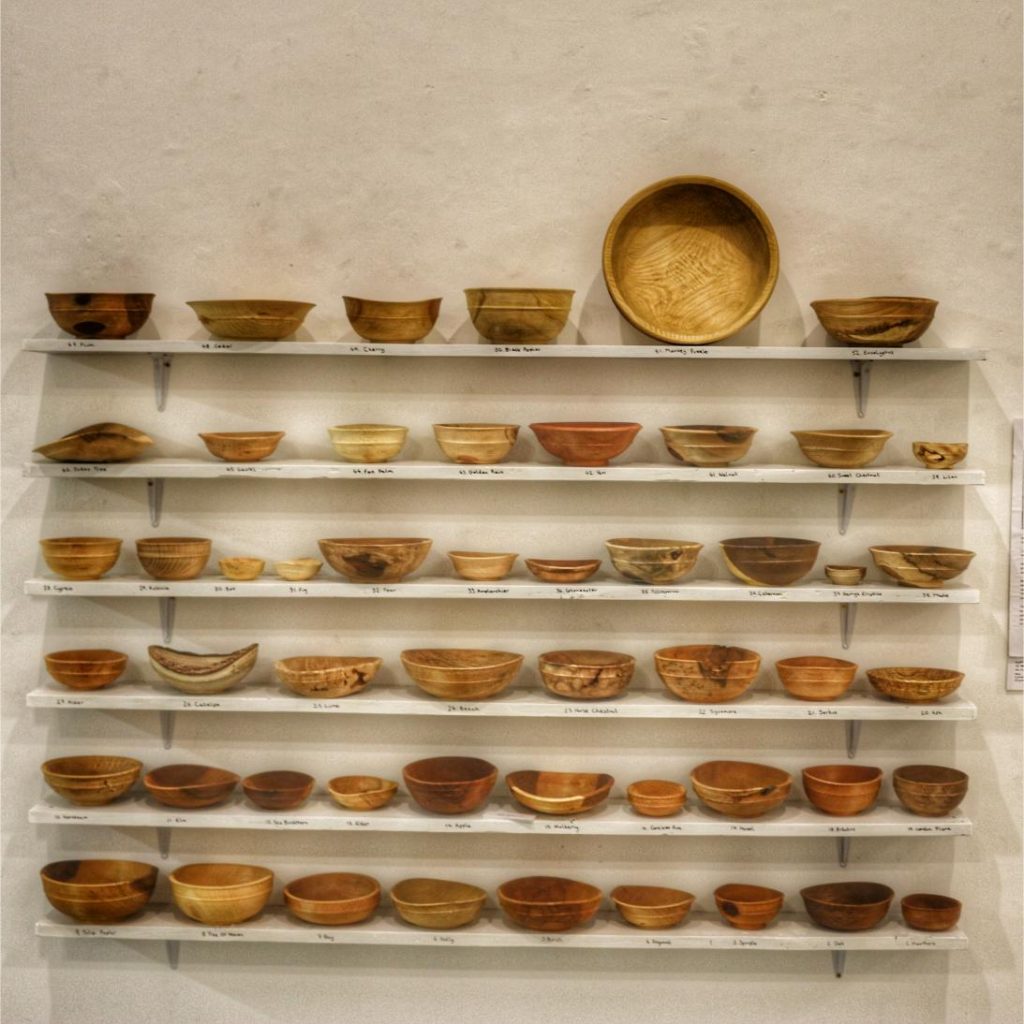
Firstly, to hold onto a body of work this large is an incredible thing for a maker. I had initially thought I would sell the bowls as I made them, but they quickly became family and it is evident they belong together and are so much more powerful together as a whole. When I looked at them as a unit after 2022 ended it was wonderful to be able to see them all together and my progress through the year. Bowl#1 (hawthorn) and Bowl#52 (eucalytpus) are both lovely bowls to anyone’s eye, but my mastery of the form, technique and understanding of wood’s peculiarities had evolved so much. In 2024 I finally exhibited all 52 bowls together at the Connections Through Wood exhibition in Bristol, and it was lovely to see how people engaged with them as an artwork.
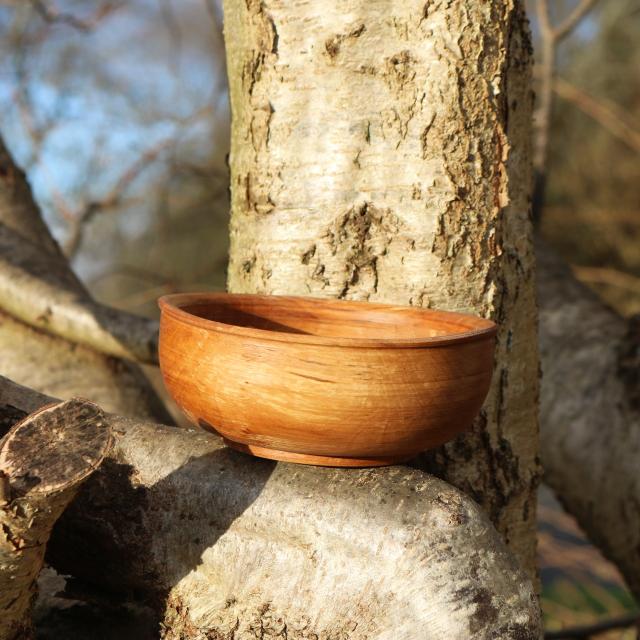
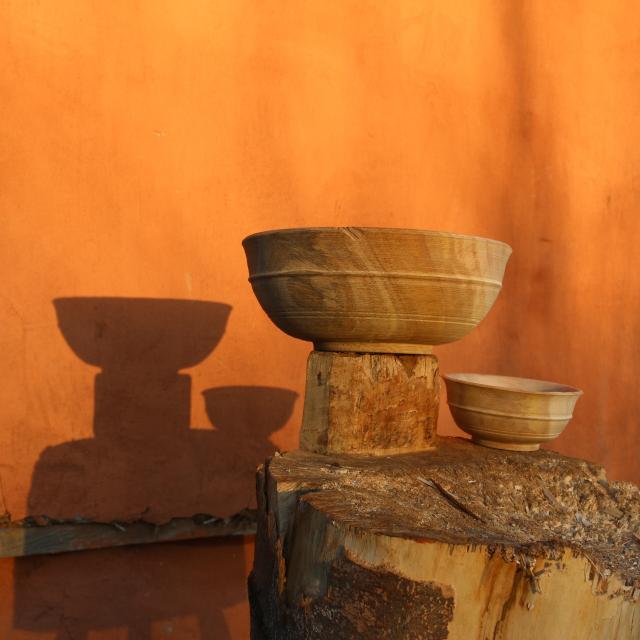
It also changed how I saw myself as a maker. When the project began I had given myself the firm label of craftsman. This in itself had been a big chance as I stepped away from the ‘engineer’ I thought I was. Then mid-project I had to turn a bowl with some flaws in (#17: hazel) as when else was I going get a piece of 7″ hazel! I loved it and this unlocked a creative play element in me that had not existed since art classes at school. I began to actively seek out the ‘damaged’ imperfect pieces of wood and for a time I told myself that perhaps I was an artist, not a scientist, after all. It has been fascinating for myself (and hopefully others) to watch me break down all these barriers we put up in life. By the end I realised that these labels are things we and others put on ourselves to make life each to digest and that I shifted between them day to day and, indeed, moment to moment. I like making things is about the only firm label I’ll give myself these days. One of these days I’ll do a post about art versus craft, as it is a topic which I ruminate on regularly.
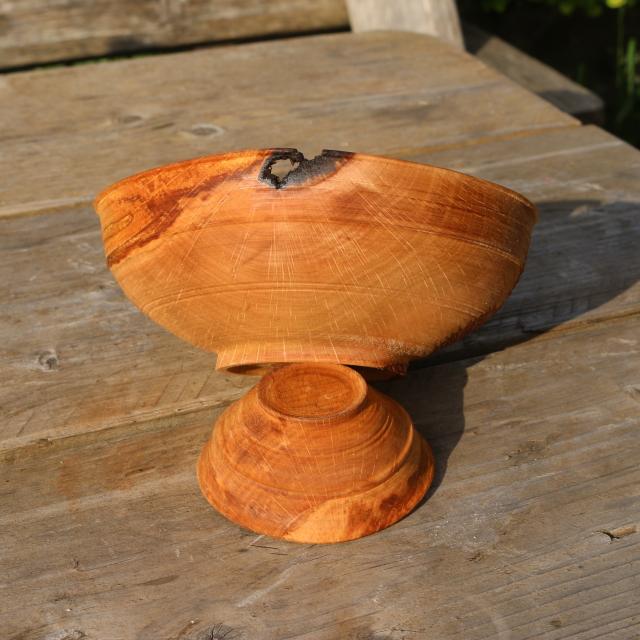
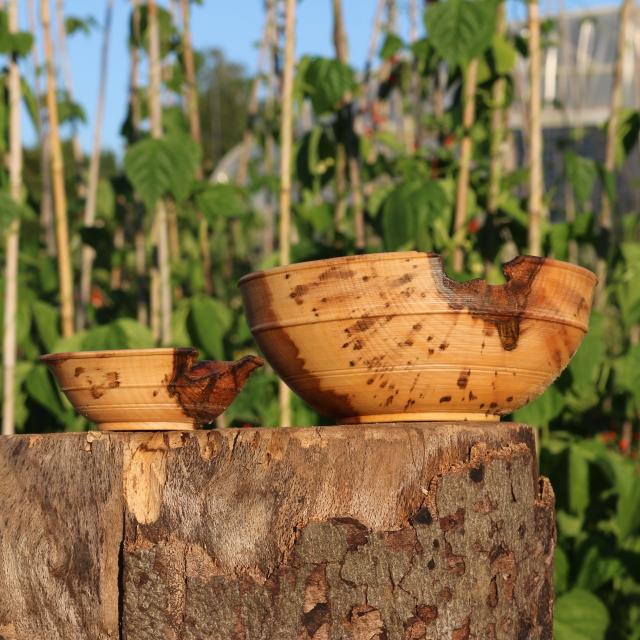
However, the biggest realisation of the project, was noticing how the connections we make are such a large part of what brings happiness and fullness to life. By the end of thee project I was presenting it to groups and summarising it as representing a community who had clubbed together to make it happen, often going out of their way to get a blank to me. I’m eternally grateful for the comfort that this realisation has granted me. Making can sometimes seem like such a solitary practice, but it is so much more than that.
The bowls are currently in a cardboard box in my shed. I’d love to see them displayed somewhere more permanently, and perhaps this will happen once I reach 100. I can’t see them ever being sold unless as a group. I may however sell the nest bowls that came from their cores. I’m sure a path will emerge as the project nears completion.
Over the coming weeks I’ll release new instagram pics of the latest woods I’ve turned. The complete list I have turned so far is listed below. In addition I have followed it with a list of woods I would like to turn to complete the project. If you know of any of these cut down in the UK I’d love to hear from you. I only need pieces 3″ in diameter and higher, ideally without knots! Please, do get in touch! With luck, the last wood will come from Kew Gardens and I’d love to be able to turn it live as part of an exhibition there sometime next year. If anyone knows someone who works at Kew, please, do get in touch!
The current list is as follows:
- Hawthorn
- Pedunculate Oak
- Spindle
- Dogwood
- Birch
- Holly
- Bay
- Tree of Heaven
- Tulip Poplar/Liriodendron
- Hornbeam
- Elm
- Sea Buckthorn
- Elder
- Apple
- Mulberry
- Corsican Pine
- Hazel
- Arbutus (Strawberry Tree)
- London Plane (Lacewood)
- Ash
- Rowan (Mountain Ash)
- Sycamore
- Horse Chestnut
- Beech
- Lime (Linden)
- Catalpa (Indian Bean Tree)
- Alder
- Cypress
- Robinia (False Acacia, Black Locust)
- Box
- Fig
- Pear
- Amelanchier (Serviceberry)
- Cotoneaster
- Pittosporum
- Labernum
- Garrya Elliptica (Silk Tassel Bush)
- Norway Maple
- Lilac
- Sweet Chestnut
- Walnut
- Yew
- Golden Rain (Koelreuteria)
- Fan Palm
- Laurel
- Judas Tree (Redbud)
- Plum
- Cedar
- Cherry
- Black Poplar
- Monkey Puzzle (Araucania)
- Eucalyptus
- Medlar
- Larch
- Rose
- Buddleia
- Myrtle
- Apricot
- Blackthorn
- Whitebeam
- Pagoda Tree
- Leylandii
- Juniper
- Mahonia (Berberis)
- Purging Buckthorn
- Liquid Amber
- Unknown? (maybe Arbutus)
- Magnolia
- Redwood (Sequoia)
- Gorse
- Caucasian Wingnut
- Ivy
- Silver Maple
- Box Elder
- Grapevine
- Vibernum
- Willow
- Smokebush
- Cabbage Palm
- Gleditsia (Honey Locust)
- Gingko
- Nothofagus
- Handkerchief Tree (Dove Tree/Ghost Tree)
- Kentucky Coffee Tree
- Spruce
- Holm Oak
- Quince
- Trumpet Vine
- Scots Pine
- Wisteria
- Hickory
- Foxglove Tree
- Enuonymus
- …
The final 7 woods I would love to find (or 8 if I replace #67 which I am not certain of the woodtype) :
- Olive wood
- Western Red Cedar
- Wild Service Tree
- Rhodedendron
- Alder Buckthorn
- Guelder Rose
- Hackberry
- Staghorn Sumac
Some other woods I am missing that I know grow in the UK:
- Zelkova
- Flamingo Tree
- Aspen
- Keaki
As ever, comments and ideas appreciated 🙂